REVIEW · COFFEE EXPERIENCES
Santo Domingo Small Group Walking Tour: Beer and Specialty Coffee
Book on Viator →Operated by Xcape Tours · Bookable on Viator
Your coffee stop comes with Columbus.
This is a small-group walk through Santo Domingo’s UNESCO Colonial Zone, focused on big landmarks and real street-level details, from Calle El Conde to the old plazas. I like that you get both the drink-world and the history-world: a specialty coffee or tea choice plus tastings that keep the tour from feeling like a lecture. With guides like Paco and Jean Carlos, you also get story-telling that fits the places you’re standing in.
One thing to consider: site closures and renovations can affect what you go inside. The Alcázar de Colón and the Pantheon are currently closed for renovations (you’ll view from the outside), and museums/cathedrals can also be closed on Mondays, so the pace can shift depending on the day.
In This Review
- Key Highlights You’ll Actually Notice
- Why Santo Domingo’s Colonial Zone Works for a 2-Hour Walk
- Price and Value: Why $59 Can Feel Like a Win
- Meeting Point at Casa Barista: A Smart Start for Coffee Lovers
- Walking the Colonial Streets: Calle El Conde and the City’s “Front Door”
- Parque Colón: A Quick Stop With Big Historical Weight
- Catedral Primada: The Stop You Should Dress for (and How)
- Calle Las Damas and Plaza de España: Where the Old City Feels Intact
- Ozama Fortress and the Pantheon: Power, Memory, and What You See Outside
- Reloj de Sol and Museo de las Casas Reales: Time and the Governor’s Court
- Alcázar de Colón and Ruins of San Francisco: When Renovations Change the Plan
- Hospital San Nicolás de Bari: A Less-Expected but Fascinating Stop
- The Drink Program: Coffee, Beer, and Mama Juana
- Specialty drink (your choice)
- Local beer tasting
- Mama Juana tasting
- Group Size and Guide Style: What Max 12 Really Means
- Who This Tour Fits Best (And Who Might Want a Different Plan)
- Should You Book This Beer and Specialty Coffee Walking Tour?
- FAQ
- How long is the Santo Domingo small group walking tour?
- What is the price per person?
- What drinks are included in the tour?
- Where does the tour start?
- Which admissions are included?
- Are there any dress requirements for entering the cathedral?
- What sites might be closed or only viewed from outside?
- Is the tour offered in more than one language?
- What ticket format do I need?
- What is the weather situation for this tour, and what happens if it’s bad?
- What is the cancellation window?
Key Highlights You’ll Actually Notice
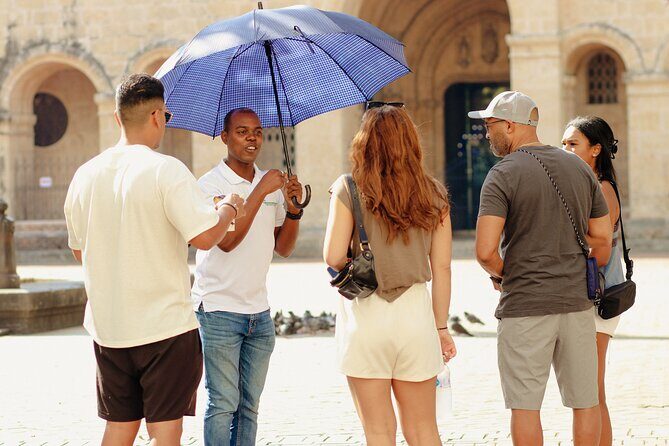
- Max 12 people means the guide can keep it personal and adapt the walking pace to your group.
- Catedral Primada de las Américas is the big “first in the Americas” church stop, with included admission and practical dress rules.
- Food-and-drink loop: specialty coffee or tea, local beer tasting, and a Mama Juana tasting (plus bottled water).
- Calle Las Damas and Calle El Conde: two key streets that help you understand how the Colonial Zone grew and changed.
- Several major stops are exterior views right now due to renovations, but you still get context on what you’re seeing.
Why Santo Domingo’s Colonial Zone Works for a 2-Hour Walk
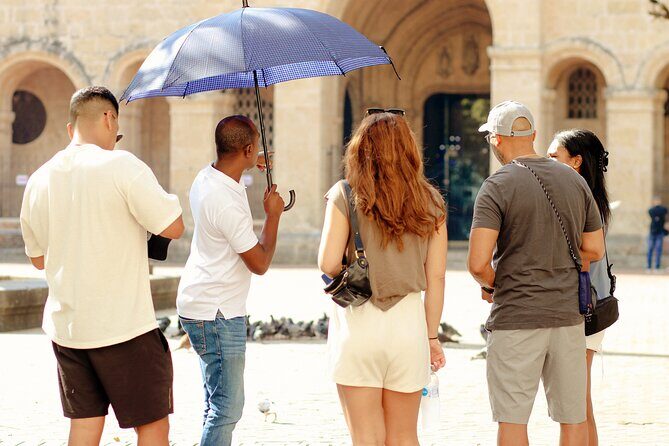
Santo Domingo’s Colonial Zone is built for walking, because many of the landmarks are packed close together and the streets do a lot of the work for you. You’re not just looking at buildings—you’re moving through the historic layout, with plazas and narrow lanes that make it easier to grasp how the city functioned.
This tour uses that layout well. The route links major religious sites (like the Catedral Primada), civic spaces (Parque Colón, plazas), and old fortifications and institutions (Ozama Fortress, Hospital San Nicolás de Bari). Then it breaks that up with drink stops so you don’t burn out before the best sights.
The other practical win: the tour runs about 2 hours, so it fits neatly into a day without stealing a whole morning or afternoon.
You can also read our reviews of more walking tours in Santo Domingo
Price and Value: Why $59 Can Feel Like a Win
At $59 per person, you’re paying for more than a guide and a walk. The included items matter, because they’re not optional “upsells.”
Here’s what you get included:
- admission to Museo de las Casas Reales (with a note that it’s under maintenance and may show work happening)
- admission to the Cathedral of Santa María la Menor (subject to schedule)
- one specialty drink (latte, cappuccino, tea, or hot chocolate)
- local beer tasting and one bottled water
- Mama Juana tasting
- an expert local guide, bilingual (English/Spanish)
When you price those pieces separately—especially cathedral/museum admissions plus specialty drinks—the tour starts to look like a budget-friendly way to “bundle” a lot of stops into one guided loop.
One more value detail: group size stays small (max 12). That tends to reduce the awkward waiting that can happen on bigger tours, and it also makes it easier to ask questions mid-walk.
Meeting Point at Casa Barista: A Smart Start for Coffee Lovers
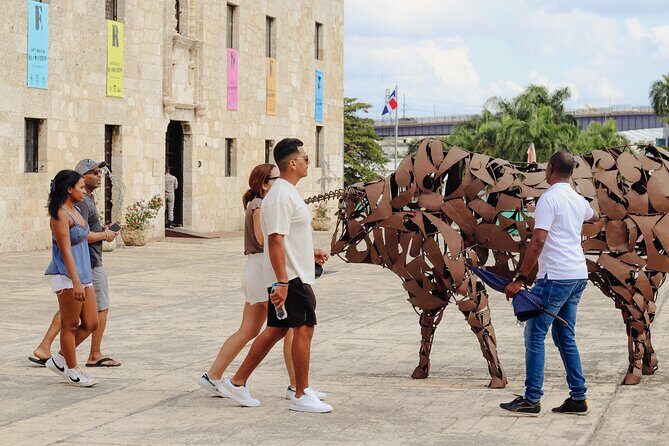
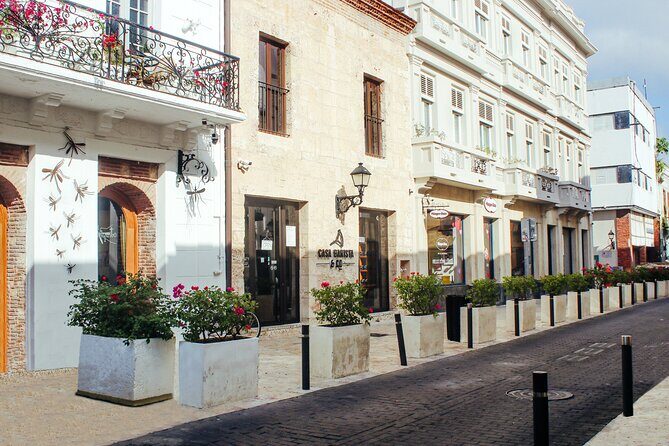
You meet at Casa Barista & Co., on C. Arzobispo Meriño 268, Santo Domingo. Starting at a coffee place is a small detail, but it changes your whole vibe. You get oriented quickly, and it makes sense given the tour theme.
The tour is also listed as near public transportation, so you’re not locked into a taxi-only start. If you’re coming from outside the Colonial Zone, plan a little extra time so you arrive with room to settle in and start on time.
Walking the Colonial Streets: Calle El Conde and the City’s “Front Door”
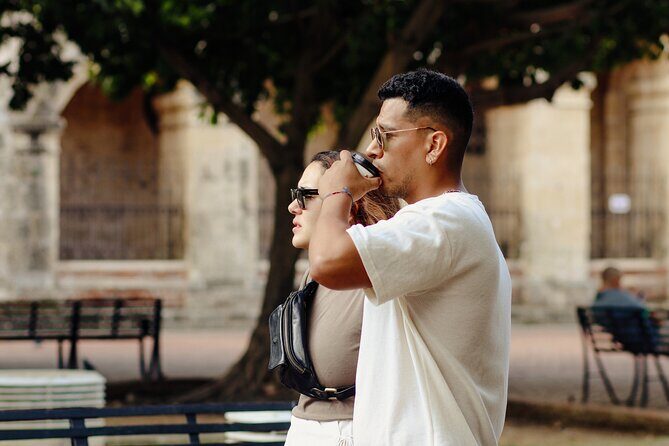
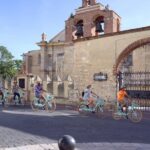
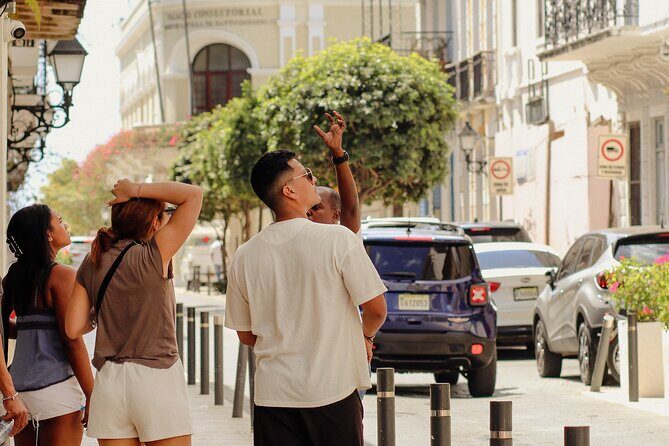
The experience begins in the historic heart, in an area packed with cultural attractions, restaurants, and parks. From there, you’ll stroll along Calle El Conde, a pedestrian street known for shops, art, and cafes.
This part is useful even if you’ve never been here before. It helps you:
- get your bearings fast (what’s where, how streets connect)
- feel the rhythm of the Colonial Zone
- notice how the pedestrian lanes shape the “public life” of the area
You also start seeing why the drink part of this tour works. The streets and stops naturally line up with coffee and beverage moments—so it doesn’t feel like you’re detouring into random side streets.
Parque Colón: A Quick Stop With Big Historical Weight
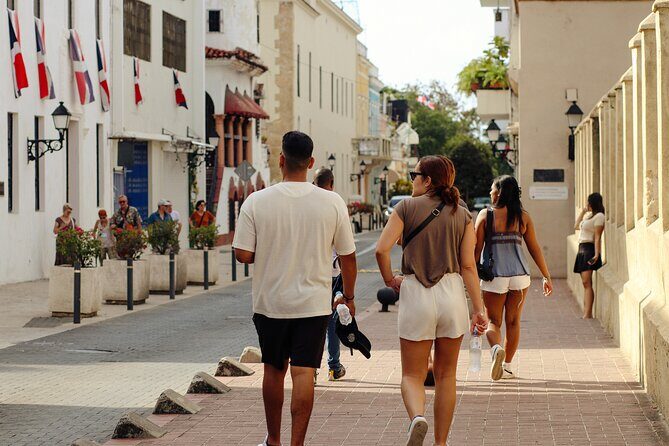
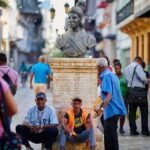
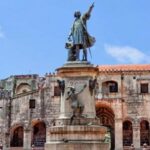
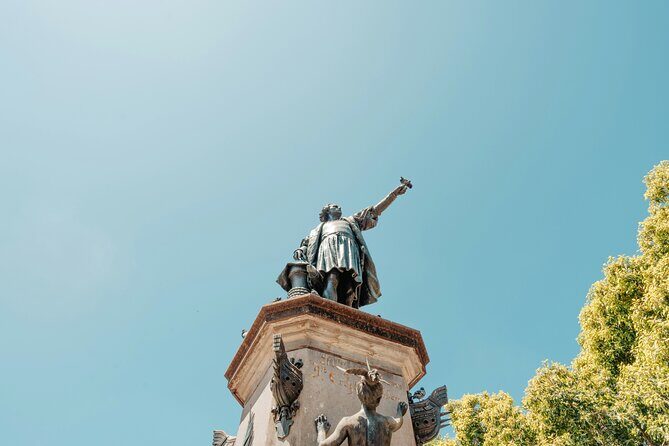
Next is Parque Colón, the central square in the historic district. The headline feature here is the Christopher Columbus statue, and the square’s name was tied to him in 1887.
This is a short stop, but it matters because it frames what you’ll keep seeing throughout the walk: the city’s colonial-era identity and how people commemorate it in stone, streets, and plazas.
If you’re the kind of person who likes context before you enter buildings, this stop works well. It gives you a reference point for the rest of the route.
You can also read our reviews of more food & drink experiences in Santo Domingo


Catedral Primada: The Stop You Should Dress for (and How)
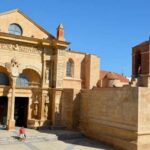
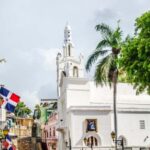
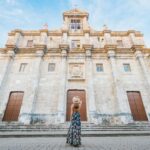
The highlight for many people is Catedral Primada de las Américas de Santo Domingo. It’s dedicated to St. Mary of the Incarnation, construction began in 1504, and it took 46 years.
Two reasons this stop is worth your time:
- it’s described as the first and oldest in the Americas
- it’s included with admission, so you can actually go in (when the cathedral is open)
Practical tip that can make or break your experience: cathedral visitors must wear clothing that covers shoulders and knees. If you arrive in shorts or a tank top, you may have issues getting in. Bring a light layer if you’re unsure.
Also, plan on spending enough time inside to let the space register. Churches here can be visually intense, and you want to avoid rushing through the features.
Calle Las Damas and Plaza de España: Where the Old City Feels Intact
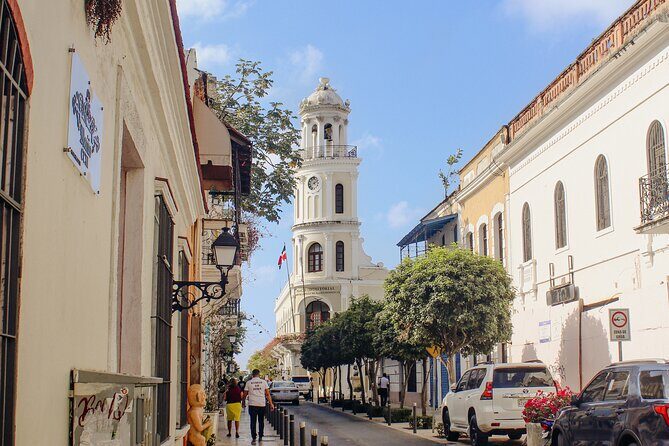
Calle Las Damas is often called the street of the ladies, and it’s famous for being the first paved road in the Americas. The architecture traces back to the 16th century, and the narrow road contains colonial buildings that now serve as museums and embassies (among other uses).
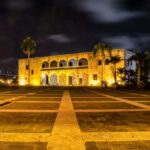
Then the walk reaches Plaza de la Hispanidad (Plaza de España) at the end of Calle Las Damas. It’s a romantic esplanade with a key visual: the Alcázar de Colón palace nearby.
This segment gives you that “street-to-building” connection that a bus tour can’t. You see the city’s old pathways and then immediately land in a plaza where the buildings are positioned to impress.
If you prefer photo breaks you can actually enjoy (not just quick snapshots), this section tends to offer good pause points. The route also makes it easier to compare street narrowness vs. open plaza space.
Ozama Fortress and the Pantheon: Power, Memory, and What You See Outside
You’ll also pass the Ozama Fortress, built by the Spanish in the early 16th century. It’s described as the first permanent military structure in the Americas and marks the beginning of Spanish colonization. The fortress is castle-like, and the architecture helps explain how early Spanish rule was meant to hold ground.
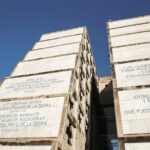
After that comes the Pantheon of the Fatherland, an 18th-century Jesuit church and the Dominican Republic’s national mausoleum. It’s guarded by a presidential honor guard, and it holds remains of national heroes such as Gregorio Luperón and Salomé Ureña (plus others mentioned as part of the national pantheon).
Important current note: the Pantheon is currently closed for renovations, so you’ll likely view it from the outside.
That can be disappointing if your plan depends on inside access. But it’s still valuable because you’re connecting two ideas:
- military control and fortification (Ozama Fortress)
- national identity and remembrance (the Pantheon)
If you’re building a mental map of how this city “works” historically, these views still help.
Reloj de Sol and Museo de las Casas Reales: Time and the Governor’s Court
The walk includes the Reloj de Sol, a stone clock about 12 feet tall, located in front of the Royal Houses Museum since 1753. Even if you don’t think much about clocks, this stop is a neat way to understand how official timekeeping shaped daily life and governance.
Then you reach Museo de las Casas Reales, the Museum of Royal Houses. The key idea here is that the building was the Spanish Governor’s Royal Court in the 16th century. The museum also offers an overview of Dominican history from colonialism to independence in 1821.
Two practical notes that affect expectations:
- admission is included
- the museum is under maintenance, so you may see work happening
If you hate construction scaffolding, that might slightly reduce the wow factor. Still, you’re getting the included museum context, and you’ll appreciate why the clock and the royal court sit so close together.
Alcázar de Colón and Ruins of San Francisco: When Renovations Change the Plan
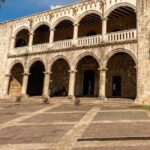
The route stops near Alcázar de Colón, described as the first European palace fortified in the Americas, built between 1510 and 1514. It’s listed as having Gothic and Renaissance style influences and is recognized for its role as a major early residence connected to European figures in the New World.
However, the current reality is that Alcázar de Colón is closed for renovations, so you’ll likely view it from the outside.
Next up are the Ruinas de San Francisco—the first Franciscan monastery in the New World. These are rustic walled ruins in the Colonial City with a complicated history that includes damage from a fire (details of causes aren’t fully spelled out here). Either way, ruins can be powerful because they show you what remains when centuries wear things down.
This pairing is smart: palace architecture tells one kind of story, while monastery ruins tell another. Even without inside access, the contrast helps you “read” the city.
Hospital San Nicolás de Bari: A Less-Expected but Fascinating Stop
One of the most interesting moments in this route is Hospital Saint Nicholas of Bari (San Nicolas de Bari Hospital). It was built between 1503 and 1508 under Governor Nicolás de Ovando, and it’s described as the oldest hospital in the Americas, serving as a model for others.
Today, it lies in ruins on the north side of the area you’ll be walking through.
This is a short stop, but it adds balance. Too many historical tours focus only on power and religion. Here, you also see how early institutions cared for health—at least as the Spanish system understood it at the time.
If you like history that goes beyond grand cathedrals and statues, you’ll probably enjoy this.
The Drink Program: Coffee, Beer, and Mama Juana
This tour isn’t only “historic sightseeing.” It’s a drink-and-walk experience, and the drinks are the fun payoff after you work your way through the main sites.
Specialty drink (your choice)
You get one specialty drink selection, with options listed as latte, cappuccino, tea, or hot chocolate. For coffee people, starting with a proper beverage choice makes sense, especially if you’re walking in warmer weather.
Local beer tasting
You’ll also get a local beer tasting plus one bottled water. Even if you only take small sips, it’s a classic way to sample what locals drink without committing to a full pour.
Mama Juana tasting
Finally, you’ll try Mama Juana, a Dominican spiced rum preparation. It’s included in the tour, so you don’t have to hunt for it separately.
Practical tip: plan on pacing yourself. With multiple stops on cobblestones, you don’t want to feel too slowed down by anything warming or alcoholic.
This drink portion is also a social anchor. It gives you a relaxed moment mid-walk where you can ask questions, snap photos, and reset.
Group Size and Guide Style: What Max 12 Really Means
This is a bilingual tour with a maximum of 12 travelers. That matters because the route includes several indoor moments (depending on schedules), plus multiple exterior views.
Small groups help in two ways:
- less time waiting at the edge of a doorway
- more room to ask follow-up questions in English or Spanish
Guides like Jean Carlos and Paco are part of the reason the tour gets such consistently strong ratings. They’ve been described as friendly, funny, and good at connecting stories to what you’re actually looking at.
One thing to watch for: if a site you expect to enter is closed (or under maintenance), the guide may adjust the sequence. That can make the walk feel faster, especially if you were hoping to linger inside longer.
Who This Tour Fits Best (And Who Might Want a Different Plan)
This is a great fit if you want:
- a focused walk through the Colonial Zone without building a full self-guided itinerary
- a mix of cathedrals, plazas, fortifications, and ruins
- food-and-drink elements that are included, not extra
You’ll likely enjoy it if you’re a history fan who likes context in plain language, or if you’re more of a culture-and-coffee person who still wants to understand what you’re seeing.
It may be less ideal if you:
- hate walking (there’s a lot of cobblestone time)
- need maximum indoor access right now, since the Alcázar de Colón and Pantheon are currently closed for renovations
- want a slow pace with long museum time every stop, since the tour is designed to cover a lot in about 2 hours
Should You Book This Beer and Specialty Coffee Walking Tour?
If you’re visiting Santo Domingo and want an efficient, enjoyable way to hit the key Colonial Zone sites, I think this one is a strong pick. The price makes sense because it bundles admissions with drinks, and the small-group format keeps it from turning into a chaotic stampede.
I’d book it if your priorities are:
- seeing the Catedral Primada
- walking Calle El Conde and Calle Las Damas
- tasting beer and Mama Juana
- getting a guide who can explain what matters while you’re still standing there
Just go in with realistic expectations about renovations and Monday closures. That’s the main variable. If you can be flexible, you’ll get a very satisfying 2-hour mix of old stones and local flavors.
FAQ
How long is the Santo Domingo small group walking tour?
It runs for about 2 hours (approximately).
What is the price per person?
The price is $59.00 per person.
What drinks are included in the tour?
You get one specialty drink (latte, cappuccino, tea, or hot chocolate), a local beer tasting, and a Mama Juana tasting, plus one bottled water.
Where does the tour start?
The meeting point is Casa Barista & Co., C. Arzobispo Meriño 268, Santo Domingo 10210, Dominican Republic.
Which admissions are included?
Admission is included for the Museo de las Casas Reales and for the Catedral of Santa María la Menor, with notes that hours/scheduling can affect access.
Are there any dress requirements for entering the cathedral?
Yes. Cathedral visitors must wear clothing that covers their shoulders and knees.
What sites might be closed or only viewed from outside?
The Alcázar de Colón and the Pantheon are currently closed for renovations, so you’ll likely see them from the outside.
Is the tour offered in more than one language?
Yes. It is bilingual, with information shared in English and Spanish.
What ticket format do I need?
This experience uses a mobile ticket.
What is the weather situation for this tour, and what happens if it’s bad?
The experience requires good weather. If it’s canceled due to poor weather, you’ll be offered a different date or a full refund.
What is the cancellation window?
You can cancel for a full refund up to 24 hours in advance of the experience start time.