REVIEW · SAMANA
El Limón: Ziplining Adventure
Book on GetYourGuide →Operated by Whale Punta Cana · Bookable on GetYourGuide
A forest canopy zip sounds simple. Then you’re suddenly flying above Samana. This El Limón adventure puts you in the trees with 20 platforms and long cables—plus big-picture views over the Samana Peninsula, Haitises National Park, and Cayo Levantado.
What I like most is how the route is built for variety: you’re not just doing one short line, you’re moving through a network (about 10 cables between platforms) that keeps changing the angle and the view. I also appreciate that equipment and guide supervision are included, so you spend less time figuring things out and more time getting ready to fly. One thing to consider: the time you’re actually zipped in the air can be shorter than you’d expect from the overall duration, especially if transfers aren’t part of your plan.
In This Review
- Quick Take: What You’ll Really Experience
- Entering El Limón Canopy: Where the Views Start
- The Harness Part: What Happens Before You Fly
- The Zip Line Circuit: 20 Platforms, 10 Cables, and Long Shots
- A Timing Reality Check (Read This Before You Plan)
- The Views You’re Paying For: Samana, Haitises, and Cayo Levantado
- Getting There and Getting Back: Transfers and Drop-Off Confusion
- Cost and Value: Is $85 Fair for This Zip Course?
- Who This Zip Line Suits Best
- Photos, Video, and Tips: How to Avoid Awkward Moments
- After the Last Cable: What Happens When It’s Over
- Should You Book El Limón Ziplining?
- FAQ
- How long is the El Limón ziplining adventure?
- What’s included in the price?
- Do I need to bring my own ziplining gear?
- Is food included?
- Are transfers included?
- Where do I meet for the tour?
- What languages are available for the guides or host?
- Is there free cancellation?
Quick Take: What You’ll Really Experience
- 20 platforms, 10 cables: A true circuit, not a single back-and-forth line.
- Up to 450 m cable length: Some zips are long enough to feel like real speed.
- Rainforest trail before you fly: You’ll walk in, get fitted, then climb to the first platform.
- Big regional views: Samana Peninsula, Juana Vicenta area, Haitises National Park, and Cayo Levantado show up from above.
- Total time vs. flying time: Some rides run closer to about an hour in the air, so plan your day with buffer time.
Entering El Limón Canopy: Where the Views Start
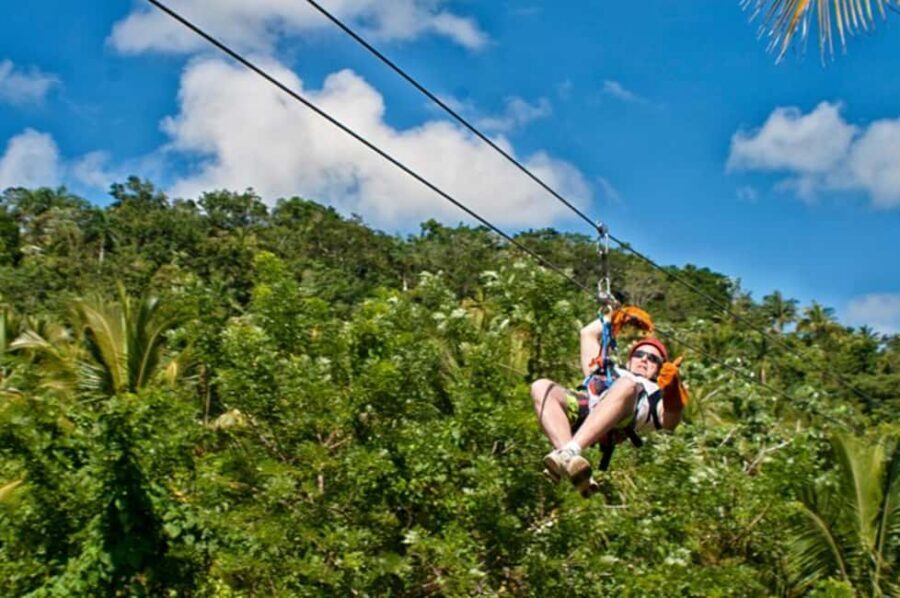
This zip line adventure runs from El Limón in the Samaná Province, with departure from Samaná. The selling point is that you’re not just “doing ziplines.” You’re doing them above the rainforest canopy, with viewpoints that let you look out over multiple landmarks in the region.
The route starts once you reach the lush Juana Vicenta area. From there, you’ll get your bearings, then put on a helmet and harness. That setup matters more than people think. A good fit keeps you comfortable and confident once you’re suspended over the trees. It also sets the pace: you’re going to be climbing some stairs and moving along a jungle trail before you ever hit the first cable.
Even before your first zip, you’re walking into a different world from the beach towns around Samaná. Expect a jungle setting with lots of vegetation close by, and a bit of that “I’m not in a normal tourist street anymore” feeling. That’s part of the value: you’re spending your money on a rainforest experience, not just a quick thrill.
You can also read our reviews of more tours and experiences in Samana.


The Harness Part: What Happens Before You Fly
Before you’re flying, you’ll do three practical things: get fitted, walk the trail, and reach the first platform.
First comes the gear: helmet and harness. This is included, along with tour guide supervision. That means you’re not just renting equipment on your own. A guide-managed setup helps you move through the basics quickly and safely, and it also gives you a chance to ask any last-minute questions.
Next, there’s a walk along a jungle trail to the first platform. You’ll climb up to that initial start point, and that climb is part of the experience because it transitions you from “standing on the ground” to “above the canopy.” Once you step onto the first platform, you can enjoy views in all directions—this is your first real taste of why this zip course is worth it.
Then the course begins: you’ll start moving from platform to platform on the cables. The structure is clear—20 platforms with 10 cables connecting them—so you always know you’re moving forward through the system, not stopping and restarting constantly.
The Zip Line Circuit: 20 Platforms, 10 Cables, and Long Shots
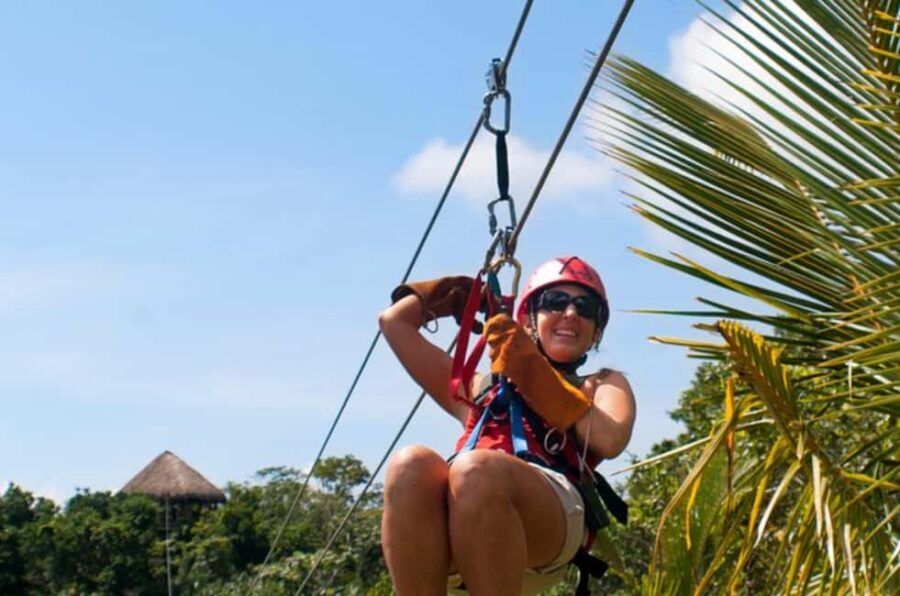
Here’s where the main experience lives. The course has 10 cables between 20 platforms, and the description highlights that some of the cables reach about 450 meters (1,475 feet) long. That length matters because it changes the feeling of a zip line: shorter rides are mostly about adrenaline. Longer ones let you settle into the glide and actually look around.
You’ll jump and fly through the network of cables. That phrasing is important—your body will be moving from the platform into motion, then transferring your weight as you ride. The guide supervision is key here, especially if you’re not an experienced zipliner.
What you get to look at from above is the real prize. The course is promoted as offering views over:
- the Samana Peninsula
- the Juana Vicenta region
- Haitises National Park
- Cayo Levantado
Even if clouds drift or the light isn’t perfect, you still get a layered view: trees below, ridges and coastline ahead, and open water when the angles line up. That combination is why this feels more like a scenic flight than a single thrill moment.
A Timing Reality Check (Read This Before You Plan)
The overall duration is listed as 3–6 hours, and the adventure is described as around 4 hours. But the key thing to plan around is that the actual flying portion can feel much shorter. Based on what people reported, the time in the air can land closer to about 40–60 minutes when the day isn’t built around included transfers.
So for planning: treat this as a half-day activity, not a full-day day-trip. Build in buffer time for walking, fitting, climbing, waiting, and getting photos/video handled. If you hate surprises, ask directly how long you’ll be on the cables once you confirm your exact start time.
The Views You’re Paying For: Samana, Haitises, and Cayo Levantado
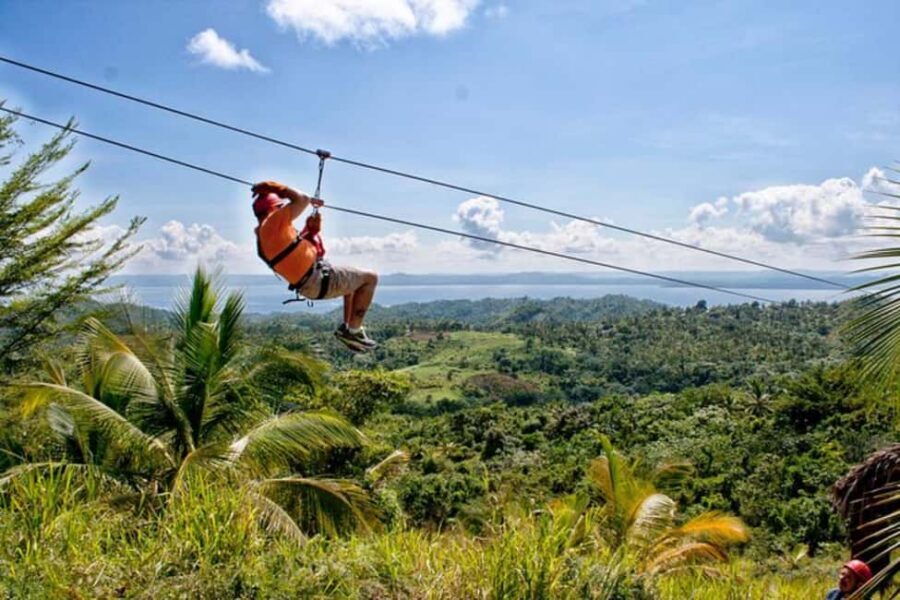
A lot of zip lines sell views. This one tries to name them. And that’s useful because it helps you set expectations for what to look for when you’re up there.
From the air, you should be able to see the broader Samana Peninsula and the surrounding region around Juana Vicenta. As the course opens up, the route is described as reaching sightlines toward Haitises National Park and Cayo Levantado. If you’re doing this as part of a bigger Samaná trip, that’s a big win: you get a bird’s-eye overview without needing a separate boat or long hike to earn those views.
Here’s how to enjoy it more: keep your head up and glance forward during each cable, not just down at the next platform. The view changes with each segment. With a network course, you’ll get small “reveal moments”—a coastline angle here, an inland patch of forest there. It’s not just one panorama; it’s a sequence.




Getting There and Getting Back: Transfers and Drop-Off Confusion

This is the one part I’d treat carefully. Transfers are listed as not included, but you’re also told the experience includes returning to your hotel for drop-off after the adventure.
What you should do: confirm what that means for your exact pickup and return. If you’re staying in Samaná, you might not need a separate transfer for the return, but you should still clarify pickup timing and location. The meeting point is handled by Isaul, who you’ll contact for the meeting point details.
If your schedule is tight, don’t assume all timing is the same for every hotel. Transfers can add time. And remember the flying portion may be shorter than expected, so you don’t want the rest of the day eaten up by unclear logistics.
Cost and Value: Is $85 Fair for This Zip Course?
At $85 per person, this isn’t a budget zip, but it’s also not outlandish for a rainforest canopy circuit with included gear and a guided operation. The value comes from three places:
- Equipment and supervision are included. That reduces friction and risk compared with DIY arrangements.
- You’re not doing just one line. The route has 10 cables and 20 platforms, including long segments that can reach around 450 m.
- You’re buying views across multiple landmarks. The Samana Peninsula, Haitises National Park, and Cayo Levantado are specifically part of what you should see from above.
The catch is that you’ll need to account for what’s not included: food and transfers. So your true “day cost” is a little higher if you have to cover local transport or get yourself to the meeting point smoothly.
If you want this to feel like a good deal, do two things:
- plan food on either side of the experience (since food isn’t included)
- give yourself enough time for the full day flow, but don’t expect every minute to be cable time
Who This Zip Line Suits Best
This works well if you want a nature-forward adventure with clear scenic payoffs. It’s especially a good fit for:
- people who like being active but prefer a guided, gear-based thrill
- visitors who want rainforest views without extra boat or hike time
- anyone who enjoys a course with multiple segments, not just one short zip
It may be less satisfying if you’re expecting a long, slow “hang and glide” day where most of the hours are spent continuously on cables. Since actual flying can be closer to an hour, you’ll want to treat it as a highlight activity, not a lengthy endurance event.
Photos, Video, and Tips: How to Avoid Awkward Moments

The experience includes guide involvement, and people have noted that guides may offer to take video. That’s good news if you want documentation without figuring out your own setup.
Still, there’s one social detail I’d plan for. Some participants reported being asked about a tip before the activity ended, which can feel uncomfortable if you’re caught off guard. If tips are part of how this operation runs, you’ll have a better time if you’re prepared—either by having cash ready or by confirming what the norm is earlier.
If you’re not into photo/video pressure, just tell your guide early that you want to skip anything extra beyond what’s included. You’ll feel in control, and the experience stays about flying.
After the Last Cable: What Happens When It’s Over
Once the zip line run finishes, you return—described as going back toward your hotel for drop-off. That wrap-up is usually part practical and part recovery: you’re tired in a good way, and you’ll want a quick transition to shower/change if you’re continuing your day.
Because the adventure includes a jungle walk and climbing to platforms, you’ll likely come away feeling like you worked a bit, not just watched scenery. Drink water, take your time leaving, and don’t schedule a long sit-down right after if you know you’ll need a bathroom break.
Should You Book El Limón Ziplining?
I’d book this if your goal is a guided rainforest zip course with real view payoffs—especially if you’re excited about seeing Samana from above. The combination of 20 platforms, long cable segments, and named viewpoints like Haitises and Cayo Levantado makes it more than a basic thrill.
I’d hesitate only if you’re trying to fill an entire day with mostly zip time. The flying portion can run closer to about an hour for some schedules, and the overall listed duration can include prep and transitions. If you want this to be a highlight, not a disappointment, plan your day with buffer time and confirm meeting point and exact flow with Isaul.
FAQ
How long is the El Limón ziplining adventure?
The activity is listed as 3–6 hours total, and it’s described as a 4-hour zip line adventure. Plan for extra time beyond flying for fitting, walking, and the platform route.
What’s included in the price?
You get the zip line adventure itself, with 10 cables between 20 platforms, along with equipment and tour guide supervision. The experience also includes panoramic views of the Samana Peninsula.
Do I need to bring my own ziplining gear?
No. Helmets and harnesses are part of the included equipment.
Is food included?
No. Food is not included.
Are transfers included?
Transfers are listed as not included. You should confirm how you’ll get to the meeting point and how return/drop-off works for your hotel.
Where do I meet for the tour?
Contact Isaul for the meeting point details.
What languages are available for the guides or host?
The host or greeter is listed as available in English and Spanish.
Is there free cancellation?
Yes. Free cancellation is available up to 24 hours in advance for a full refund.