REVIEW · CITY TOURS
Punta Cana: All Inclusive Santo Domingo Full-Day City Tour
Book on GetYourGuide →Operated by One Click Shuttles and Travel · Bookable on GetYourGuide
Santo Domingo in one long, guided day.
This excursion is a practical way to see New World landmarks and natural sights without renting a car, especially if you’re staying in Punta Cana. Two things I really like are the visit to Los Tres Ojos National Park (limestone caves with crystal-clear lakes and a cave section associated with Taino rituals) and the stop at the Catedral Primada de América, widely treated as the first cathedral built in the Americas. One consideration: the schedule is packed, so you’ll feel some time pressure—plus there’s a stair descent for the cave.
If you want the highlights of Santo Domingo—cathedrals, the Colonial Zone, and major monuments—this tour hits a lot of them in a single run. The mix of bus time, short guided walks, and photo stops keeps things moving, and lunch gives you a real break. Just know it’s not a slow wander day; you’re trading freedom for structure.
In This Review
- Quick hits
- Punta Cana to Santo Domingo: the day-trip logistics that matter
- Los Tres Ojos National Park: limestone caves, the stairs, and Taino echoes
- Columbus Lighthouse, National Palace, and the Malecón breaks
- Colón Park to the Primate Cathedral: the Americas’ first cathedral on foot time
- Hospital San Nicolás de Bari and Calle Las Damas: small stops with big personality
- National Pantheon: Dominican pride in neoclassical-renaissance style lines
- Colonial Zone free time: how to shop and wander without losing the group
- Lunch and the pace of the day: where time feels tight
- Who this Santo Domingo tour fits best (and who should skip it)
- Practical tips for your bags, water, and photos
- Guide energy and the small wins that make the day better
- Should you book this Punta Cana to Santo Domingo tour?
- FAQ
- What’s included in the Punta Cana to Santo Domingo city tour?
- How long is the tour?
- Where do pickups happen?
- Do I get to visit Los Tres Ojos National Park?
- Is there access to the Primate Cathedral on Sundays?
- What food is provided during the day?
- Are there breaks during the trip?
- What should I bring?
- Is this tour suitable for people with mobility issues or vertigo?
- Are photos and alcoholic drinks included?
Quick hits
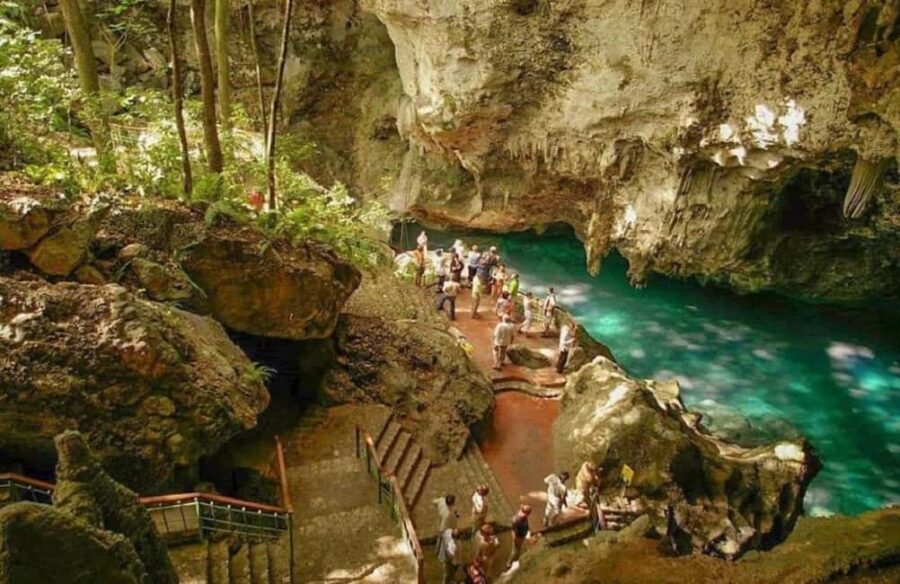
- Los Tres Ojos National Park: crystal lakes plus a cave segment with stairs and cool, damp air
- Catedral Primada de América: one of the signature stops in Santo Domingo’s old core
- National Pantheon: neoclassical-renaissance style views of Dominican identity
- Colonial Zone time: shopping + free wandering built into the itinerary
- Photo stops that add context: Columbus Lighthouse, National Palace, Malecón
- Full-day transfers: pickup from Bávaro/Uvero Alto/Macao (and you’ll switch buses at one point)
Punta Cana to Santo Domingo: the day-trip logistics that matter
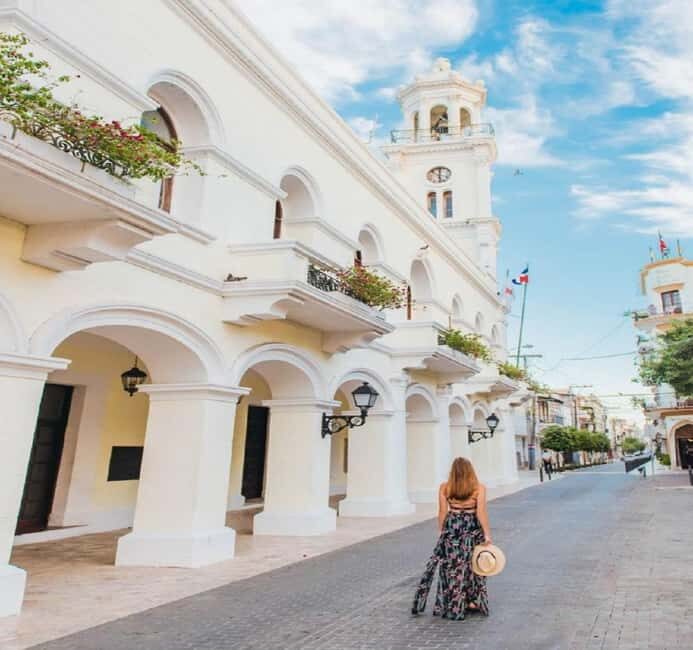
This is a long day built around one goal: maximizing what you can see in Santo Domingo without dealing with driving or finding parking. You’ll start with hotel pickup from set areas like Bávaro, Uvero Alto, or Macao (airbnb pickup isn’t available; you’ll get a confirmed nearby meeting point). Then you head out by bus with timed breaks along the way.
Plan your expectations around the road time. There are at least a couple of scheduled pauses (including a longer break after reaching a downtown service area and additional breaks later), and at one point the group stops at a gas station to board another bus. In practice, this means you’re changing vehicles rather than staying on one constant ride from start to finish.
Why this matters for you: Santo Domingo is not close to Punta Cana. If you only have a week (or you don’t want to lose vacation days to planning), the payoff is that you get a guided “greatest hits” day. The tradeoff is flexibility—you’ll be going to set stops and moving as a group.
You can also read our reviews of more city tours in Punta Cana
Los Tres Ojos National Park: limestone caves, the stairs, and Taino echoes
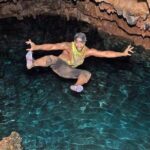
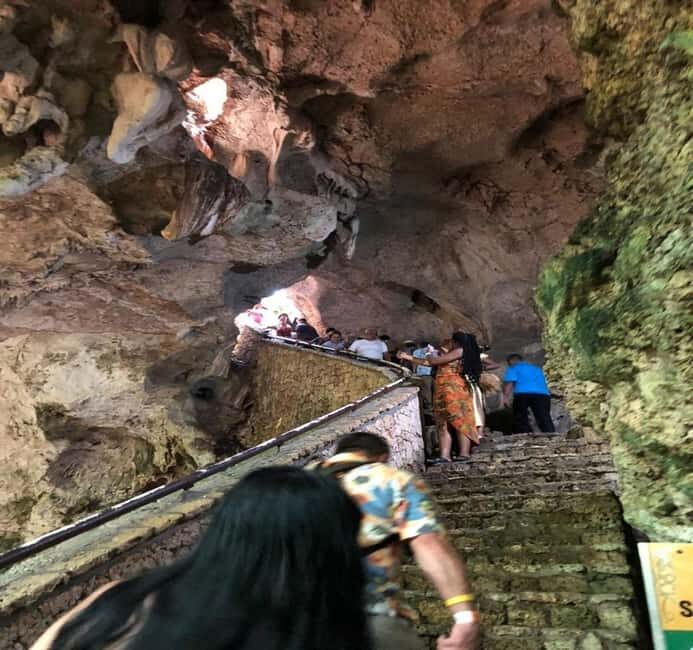
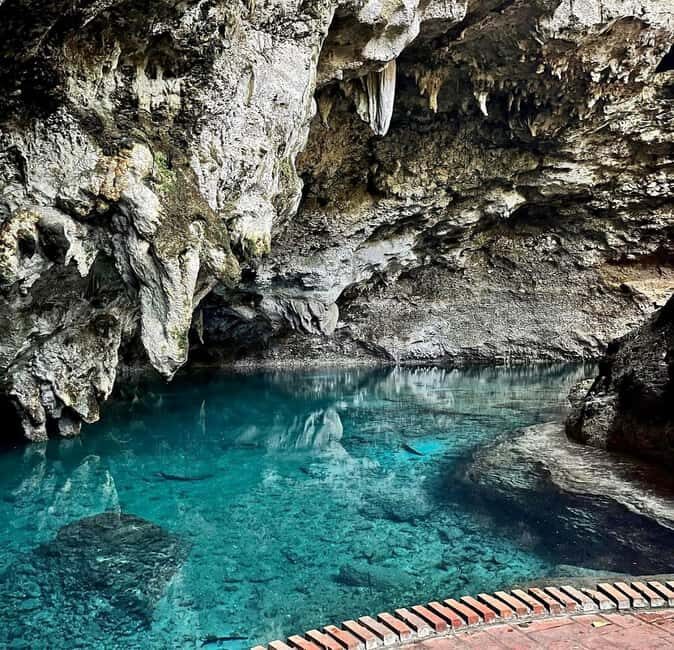
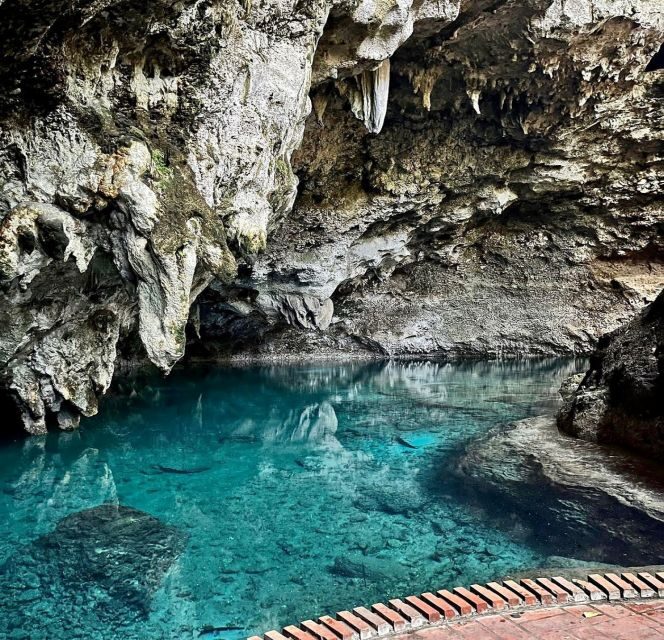
Your first true “wow” stop is Los Tres Ojos National Park, a limestone cave-and-lakes reserve where the water collects into clear pools people often refer to as the eyes. You get a photo stop and a guided visit (about half an hour on-site), and the experience is paced as a short outing inside a natural setting.
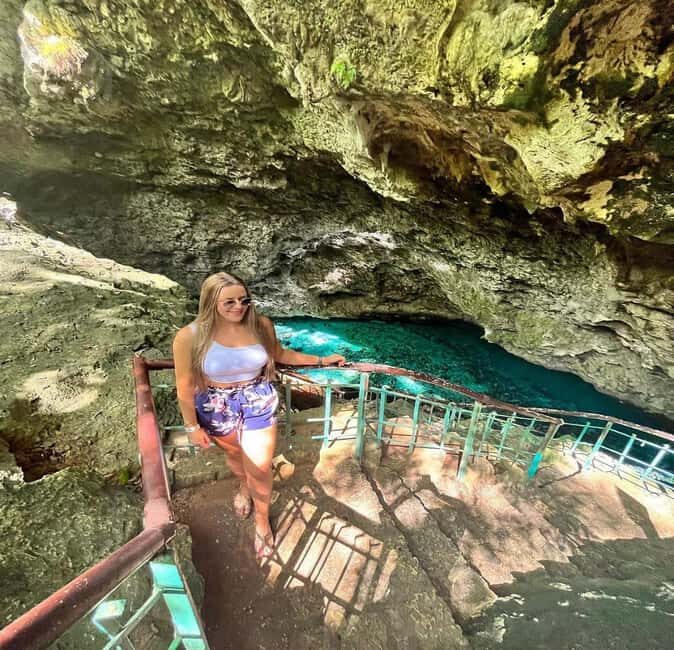
The cave element is the big practical detail. You’ll descend into a cave (Los Tres Ojos), and the tour notes there are stairs. That means sensible shoes help, and you should take your time at the steps. It’s also rain-or-shine, so if you’re going on a wet day, surfaces may be slippery.
What I like about this stop is how it breaks the usual “churches and monuments” pattern. You’re not just reading the city’s history—you’re stepping into geology and a landscape that shapes how people talk about the area. It also feels like a local-natural intermission before the city sights start stacking up.
One more note from the tour info: it’s not suitable for people with vertigo, and it’s listed as not right for certain mobility needs. If stairs and height sensations are an issue for you, this is the stop that will determine how comfortable the day feels.
Columbus Lighthouse, National Palace, and the Malecón breaks
After the caves, the itinerary turns into city landmarks—mostly quick photo stops mixed with short guided segments. You’ll head to Columbus Lighthouse for a photo stop, then on to the National Palace for another brief stop.
Then comes the Malecón (Santo Domingo waterfront) break, built for fresh air and photos. Expect this to be more about the feeling of place than about deep exploration. You’re traveling, and those stops exist to give you context between longer guided moments.
How to use these breaks to your advantage: treat them like “orientation moments.” If you’re curious about how the old city connects to modern power and waterfront life, these quick stops give you the mental map for when you’re walking later in the Colonial Zone.
Colón Park to the Primate Cathedral: the Americas’ first cathedral on foot time
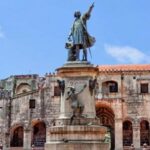
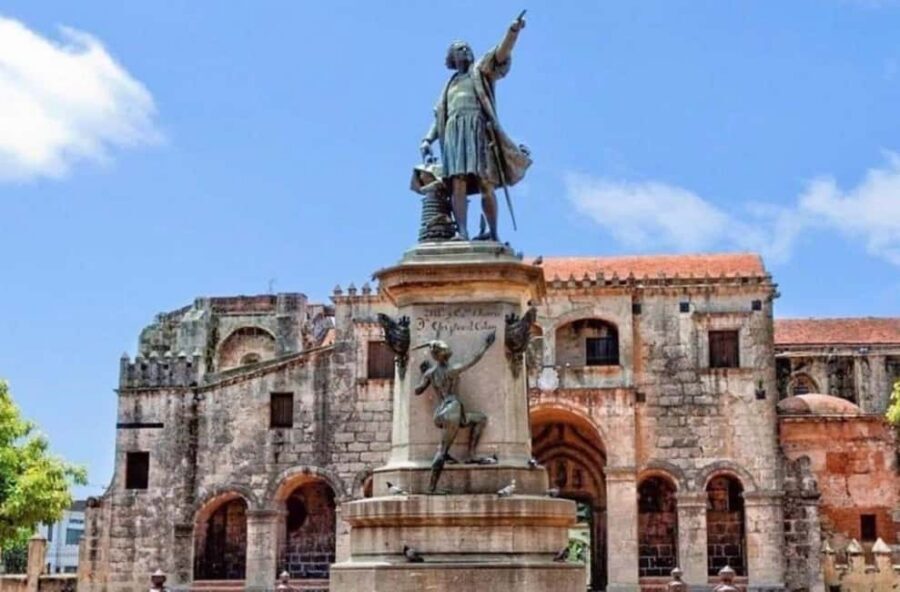
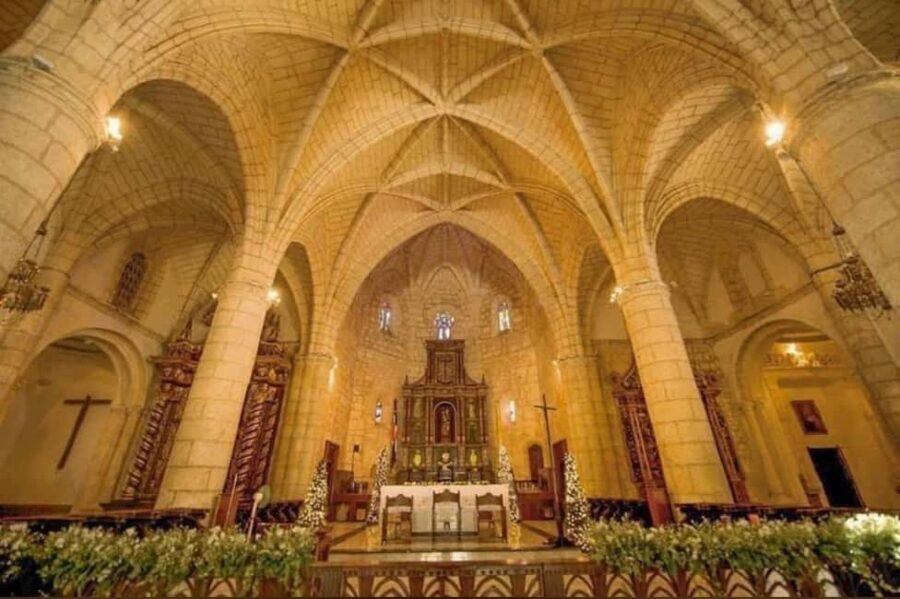
The most important walk-and-see sequence starts when the tour shifts into Santo Domingo’s historic core. You’ll make a stop at Colón Park, then head to Catedral Primada de América for a guided visit.
This is one of the reasons I think the tour is strong value: the cathedral isn’t just a photo backdrop. It’s a landmark with major historical significance, and your guide will explain what you’re looking at. Entry is included, with one timing caveat: the Primate Cathedral is closed on Sundays, so access may not be available that day.
After the cathedral, the tour takes you into the atmosphere of the old center, with time set aside later for the wider Colonial Zone.
Tip for you here: if you care about details (portals, tombs, architectural changes over time), don’t try to speed-run every corner. Instead, pick 2 or 3 things to focus on visually and let the guide connect the dots. That’s how these short guided visits stop feeling rushed.
Hospital San Nicolás de Bari and Calle Las Damas: small stops with big personality
Between the biggest monuments, the itinerary includes stops that feel smaller but add texture—like Hospital San Nicolás de Bari and Calle Las Damas.
You’ll have a guided segment with Hospital San Nicolás de Bari that includes both a photo stop and a visit. Then later, Calle Las Damas gets a photo stop plus free time. This matters because the “big sites” can sometimes feel like they’re just checkboxes. These quieter moments give you street-level atmosphere and helps you understand how the Colonial Zone works as a living neighborhood, not just a museum strip.
Also, Calle Las Damas is the kind of lane where you’ll naturally slow down. It’s narrow, photogenic, and built for strolling. That free time is your chance to linger, buy a small souvenir, or grab a better angle than the standard coach-window picture.
One caution: you’re still on a schedule. If you see something you want to buy, do it during the designated free time so you’re not bargaining with the clock later.
You can also read our reviews of more tours and experiences in Punta Cana

National Pantheon: Dominican pride in neoclassical-renaissance style lines
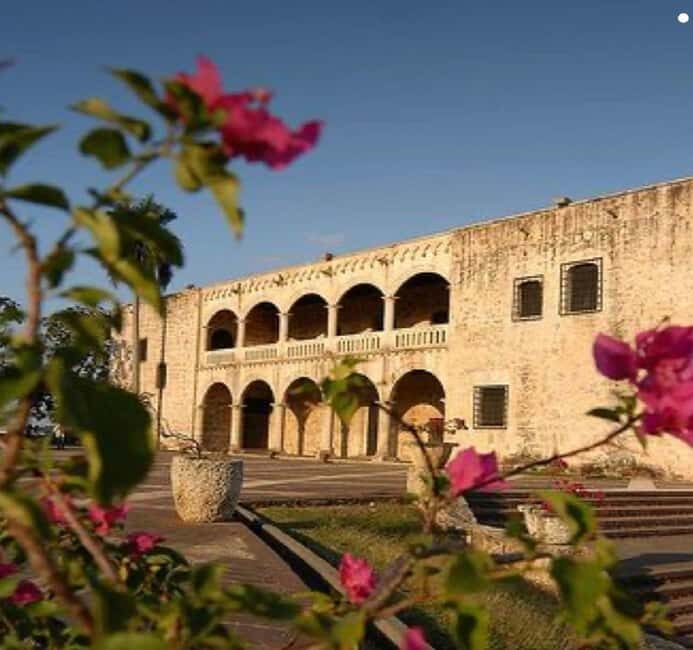
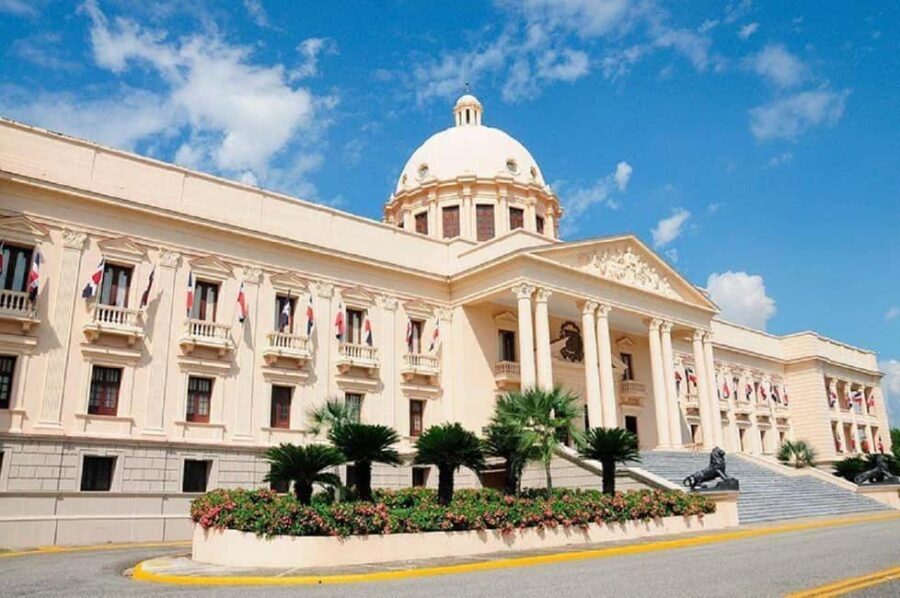
Next up is the National Pantheon of the Dominican Republic. You’ll get a photo stop and then a visit, with time set aside so you can actually go in rather than only viewing from outside.
The tour description highlights the Pantheon’s neoclassical-renaissance style, and that’s exactly what you’ll notice when you see it in person—formality, symmetry, and the kind of design meant to signal national identity. This is a useful contrast to the older church architecture in the Colonial Zone. Together, they show how Santo Domingo layers its story across centuries.
If you’re the type who likes to understand why a place “feels” the way it does, this stop helps. Architecture can be political. Monuments like the Pantheon aren’t passive—they’re built to communicate power and memory.
Colonial Zone free time: how to shop and wander without losing the group
You’ll get a chunk of time in the Colonial Zone for free wandering and shopping. This is where you can shift gears from “look, listen, move on” to “slow down, decide, and pick what you like.”
If shopping is part of your goal, keep it practical:
- Bring some cash (the tour notes cash is useful).
- Don’t assume every store takes cards.
- Stick close during the final minutes. Meeting points are not always obvious when you’re in a dense historic area.
The Colonial Zone free time also plays a bigger role than it sounds. Without it, a day trip like this can feel like a guided slideshow. With it, you get at least some personal control—plus you get a chance to look up street details the guide may not point out during the fast paced guided walk.
Lunch and the pace of the day: where time feels tight
Lunch is included, and it’s the kind of stop that can make the difference between a “great trip” and a “long day you endure.” You’ll have about an hour for lunch with drinks.
In many cases, the lunch experience is described as traditional Dominican food and a buffet setup. People also note a dessert item (sometimes described as average). I’d treat lunch as a solid recovery break, not a culinary event you plan your day around.
The bigger question for you is pacing. This tour is long, and the schedule includes:
- cave time that requires stairs,
- short guided segments at multiple landmarks,
- photo stops that can feel quick,
- and multiple travel transfers between buses.
That “schedule density” shows up in one common theme from past participants: you see a lot, but you may not linger as long as you’d like at any single location. If you’re the type who wants 2 hours in a museum, this won’t be that day. If you want a smart overview and a strong set of highlights, it works.
Who this Santo Domingo tour fits best (and who should skip it)
This tour is best for you if you want a guided day that covers major Santo Domingo sights from Punta Cana without planning your own routing. It also fits well if you like natural sights plus city monuments—Los Tres Ojos is a real change of scenery, and it makes the day feel more than just churches.
It may not fit well if:
- you have trouble with stairs or balance (the cave descent is a key factor),
- you have vertigo,
- you have mobility impairments (not suitable per tour details),
- you’re pregnant (listed as not suitable),
- or you’re over 70 (listed as not suitable).
Language can also matter. The tour provides English and Spanish live guide support, and there’s an audio guide too. Still, some parts of the day can feel like you’ll get more English attention when the live guide is present, so if you rely heavily on English narration, be ready for quick transitions during bus changes.
Practical tips for your bags, water, and photos
The tour gives clear reminders on what to bring:
- sunscreen,
- water,
- cash.
I’d add: wear comfortable shoes with grip. You’ll be walking in a historic area and going down stairs in a cave setting. Also, photos are not included, so plan to bring your own phone/camera and charge before you go.
A note about Sundays: the Primate Cathedral of America is closed on Sundays, and the itinerary says access is not available then. If you’re planning around a specific day of week, this is worth checking so the day’s highlights still match your interests.
Finally, don’t underestimate the “bus day” feeling. Several stops include transfers and waits, and one route includes the chance you’ll be on smaller shuttles at some points. If you get carsick easily, pack remedies and stay hydrated.
Guide energy and the small wins that make the day better
A lot of the tour’s quality seems to come down to the guide. Names like Willy show up repeatedly in the feedback as professional, charismatic, and organized. Other guides like Victor also come up as friendly. What matters for you is the result: when the guide is good, the day feels less like commuting and more like learning.
You’ll also benefit from the bilingual setup. The tour includes live guide sessions in English and Spanish, plus an audio guide in English and Spanish. That helps when your group is mixed or when the pace moves quickly.
One last small win: guides are known to handle the day’s weather calmly. Since this runs rain or shine, being prepared for umbrellas or sudden showers is smart.
Should you book this Punta Cana to Santo Domingo tour?
Book it if you want the practical shortcut: a guided, ticketed day that combines Los Tres Ojos, major monuments, and Colonial Zone time without the stress of planning a full-day city route from Punta Cana.
Skip or choose another option if you need lots of slow time at fewer sites, or if stairs and cave conditions are a problem for you. Also skip if you dislike long road days and bus transfers. This tour trades comfort-and-flexibility for coverage.
My final take: for most visitors staying in Punta Cana or nearby resorts, this is a strong “see the capital’s core” day. You’ll likely leave with a much clearer mental map of Santo Domingo—old churches, colonial streets, national monuments, and even those cave lakes that make the day feel like more than sightseeing on pavement.
FAQ
What’s included in the Punta Cana to Santo Domingo city tour?
Hotel pickup and drop-off, a guide, entry tickets to historical spots, lunch, and entry to the Primate Cathedral of America (not on Sundays).
How long is the tour?
About 10 hours total.
Where do pickups happen?
Pickup options include Bávaro, Uvero Alto, and Macao. Airbnb pickup is not available; a nearby pickup point is confirmed later.
Do I get to visit Los Tres Ojos National Park?
Yes. You’ll have a photo stop and a guided tour at Los Tres Ojos, including a cave descent with stairs.
Is there access to the Primate Cathedral on Sundays?
No. The tour notes the Primate Cathedral of America is closed on Sundays.
What food is provided during the day?
Lunch is included, with drinks.
Are there breaks during the trip?
Yes. There are scheduled break times on the way and in Santo Domingo, including a waterfront break.
What should I bring?
Sunscreen, water, and cash.
Is this tour suitable for people with mobility issues or vertigo?
No. It’s listed as not suitable for people with vertigo, mobility impairments, and for certain age and pregnancy needs.
Are photos and alcoholic drinks included?
Photos are not included, and alcoholic drinks are not included.