REVIEW · BAYAHIBE TOURS
Cultural Tour: Bayahibe to Santo Domingo
Book on Viator →Operated by M&E TOURS SRL · Bookable on Viator
Four lakes and centuries of stone work.
This Bayahibe-to–Santo Domingo day is a fast-moving mix of nature and UNESCO-era streets, with a guide driving the story from underground caves to the best-known monuments of the Dominican Republic’s colonial capital. It starts with a hotel pickup and a long stretch of road time, then you jump into Las Cuevas de los Tres Ojos and end the day walking classic Santo Domingo corners with time for photos and shopping.
Two things I especially like: the small group size (max 20) and the fact that the guide keeps it practical, not just lecture-style. You also get several paid entries handled (including the 3 Eyes park and multiple museums), so you’re not constantly reaching for your wallet mid-day.
One consideration: it’s an 8–9 hour day with lots of stop-and-go walking, so plan for it to feel packed. If you like slow museum time or long café hangs, you may wish you had extra hours on your own after the tour ends.
In This Review
- Key highlights to look forward to
- The long-drive setup: what your day feels like
- Stop 1: Las Cuevas de los Tres Ojos and the four-lake experience
- Stop 2: Faro a Colón and that cross-shaped photo moment
- Historic Santo Domingo: how the Colonial Zone part of the day works
- National Pantheon and Parque Colón: stop for the names and the meaning
- Palacio Nacional and photo time: the big government backdrop
- Museo de las Casas Reales: the 16th-century royal houses moment
- Calle Las Damas: the first street in Santo Domingo
- Mugado lunch and the Dominican flavors break
- Amber Museum: a slower stop before the ride back
- The crafts shop moment and the ride home
- Price and value: is $89 a smart deal?
- Who this tour suits best
- Should you book the Bayahibe to Santo Domingo culture tour?
- FAQ
- FAQ
- Where does the tour start?
- What time does the tour start?
- How long is the tour?
- What’s included in the price?
- Is pickup included?
- Are alcoholic beverages included?
- How big is the group?
- Which stops have admission included or listed as free?
- Is there a mobile ticket?
- What is the cancellation policy?
Key highlights to look forward to
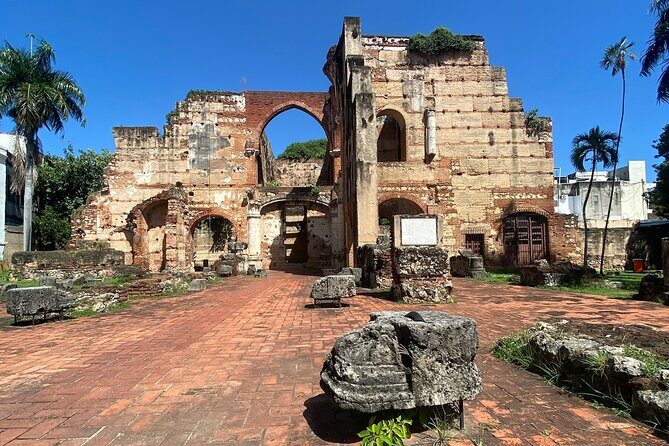
- Tres Ojos National Park’s four-lake system and the underground cave scenery
- Faro a Colón, a big cross-shaped monument with dramatic photo angles
- Santo Domingo Colonial Zone classics, including Cathedral area viewpoints and Calle Las Damas
- Museo de las Casas Reales (16th-century royal houses) for serious old-school context
- Mugado lunch, with an included Dominican buffet plus water and soft drinks
- Hotel pickup and a dedicated driver, which matters on a long day like this
The long-drive setup: what your day feels like
The tour starts at 9:00 am with pickup from your hotel lobby in the La Romana area (listed for Bayahibe travelers too). Then you get about a 2 hours 30 minutes drive to the first major stop—Las Cuevas de los Tres Ojos—so you’ll want to start the day hydrated and with a light plan for snacks.
On the way, you’re not just trapped in traffic. The format is a guided day tour: the guide connects what you’re seeing later in Santo Domingo to what you’re doing first in the park. That connection helps, because Santo Domingo’s colonial sites can feel like a blur if you show up cold.
And because the group tops out at 20 people, you’ll usually feel more like a small tour group than a packed bus with strangers. That makes a difference when the day includes photo stops, museum entry lines, and walking through tight colonial streets.
You can also read our reviews of more tours and experiences in La Romana.



Stop 1: Las Cuevas de los Tres Ojos and the four-lake experience

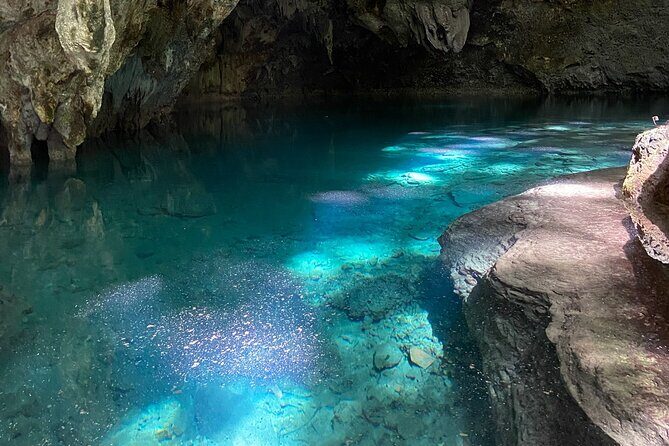
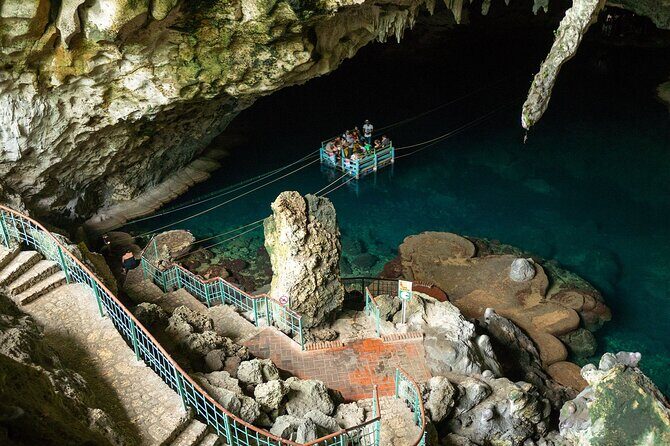
Las Cuevas de los Tres Ojos is your first big sensory shock—cool air, cave-like passages, and then lakes that look like they belong in a different climate than the Caribbean coast. The core feature here is the park’s system of four lakes, and the visit runs about two hours with admission included.
You start with what’s often the most memorable of the lakes: the Sulfur Lake. The name comes from the whitish mineral substance in the area—an easy detail to remember because it gives the whole place a scientific reason to exist, not just a pretty setting.
What I like about this stop is that it’s not just “walk around and take photos.” You’re walking through a landscape with an actual explanation for how it formed and why the waters look and feel different. If you’re visiting Dominican Republic for the first time, this is a great way to see the country’s variety beyond beaches.
Practical note: cave and park walking can mean uneven ground and occasional stairs. Wear supportive shoes, especially if your trip timing includes any rain or humidity.
Stop 2: Faro a Colón and that cross-shaped photo moment
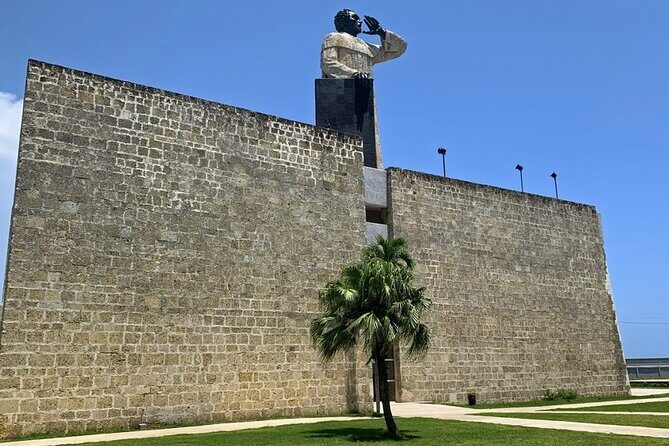
After the cave stop, you head to the Columbus Lighthouse (Faro a Colón). This monument is hard to miss: it’s cross-shaped, about 800 meters long and 36.5 meters high, and it commemorates the Christianization of the Americas. It was also inaugurated by Pope John Paul II, which is one of those added facts that gives the structure a bigger story than it might have on its own.
Your visit window is around three hours, with admission included. That’s generous enough for multiple photo angles and time to actually look at what’s inside, rather than rushing past the main forms.
What makes Faro a Colón worth your time is the sheer scale. Even when you think you understand “monument,” this one forces you to look upward and around—then it becomes easier to appreciate why guides build the story into a broader sweep of Dominican history.
If you’re the type who loves architecture, bring that curiosity. You can spend a lot of that time simply comparing the monument’s shape from different standpoints.
Historic Santo Domingo: how the Colonial Zone part of the day works
Once you enter the historic heart of Santo Domingo, the pace shifts. Instead of one main “wow” place after another, you get a sequence of monuments, churches, and streets—each one giving you a different angle on how the city formed.
You’ll be spending time around the major Colonial Zone landmarks, including photo breaks and museum time. This is where having a guide helps most, because the buildings can look similar at street level, but they each represent a specific chapter.
In other words: you’re not just sightseeing. You’re learning the city’s layout as you go.
National Pantheon and Parque Colón: stop for the names and the meaning
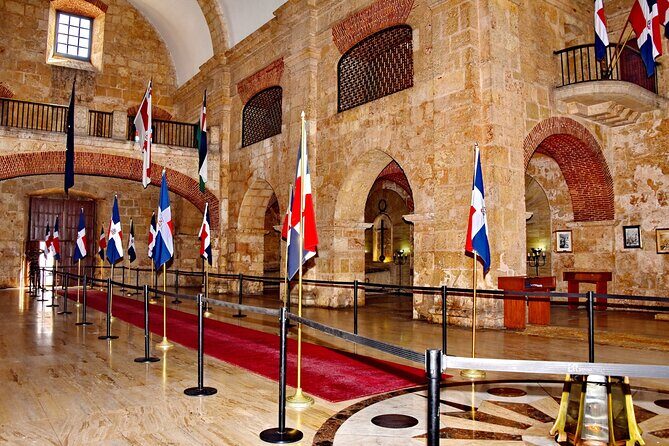
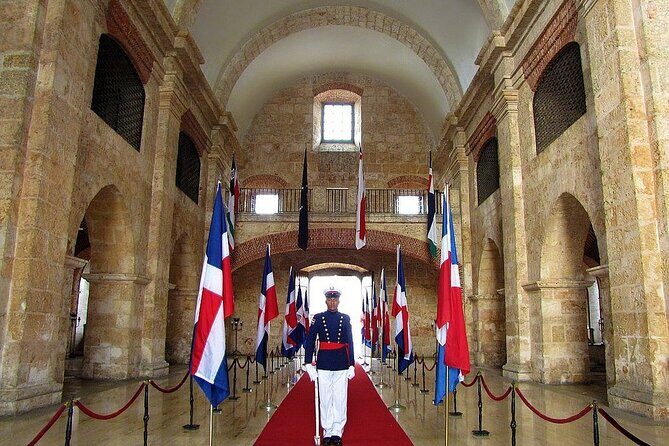
Two of your most classic breaks are the National Pantheon and Parque Colón.
The National Pantheon is a mausoleum where remains of prominent Dominican figures are preserved. The guide-linked detail that matters here is that it has around 36 empty spaces planned for future heroes. That’s the kind of fact that turns a “big building” into something with purpose.
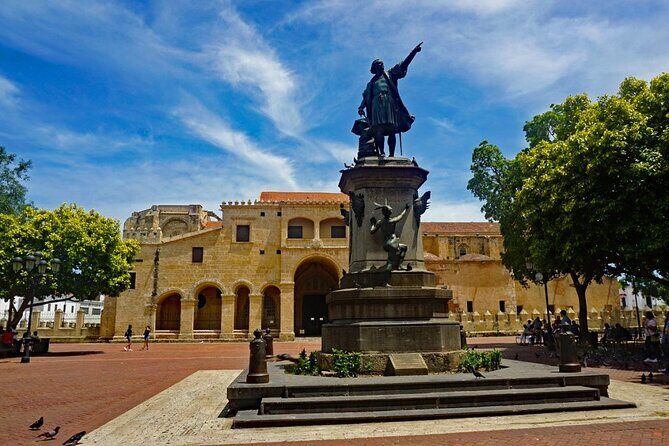
Then you move to Parque Colón, the central plaza for recreation in the Colonial City. It’s surrounded by major monuments and important corners like the First Cathedral of America and the first City Hall of Santo Domingo. You also pass near famous streets such as Calle el Conde, which helps you understand why this area is a hub even today.
These stops are shorter—about 20 minutes and 15 minutes respectively—but they’re useful. You get orientation, then you move on before fatigue sets in.






Palacio Nacional and photo time: the big government backdrop
Next comes the Palacio Nacional—the presidential palace. You’re not going here for a long museum-style visit; the plan is mostly about seeing the seat of power, taking pictures, and moving along.
The tour schedule gives you about an hour for this stretch, including the travel time between stops. So it’s less about deep interior access (not specified) and more about getting the visual context for how modern Dominican leadership sits on the same city canvas as colonial-era landmarks.
If you’re hoping for quiet, this isn’t the stop for that. If you want “place it in the map of modern history,” it’s a good one.
Museo de las Casas Reales: the 16th-century royal houses moment
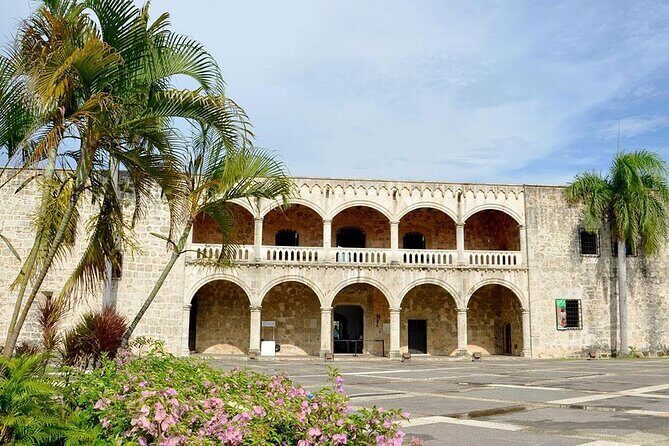
One of the better “value for time” stops is Museo de las Casas Reales. This museum is tied to the old Royal Houses headquarters from the 16th century, and it includes two palaces dating back to the captaincy general era.
Your visit runs about 35 minutes, with admission included. That timing works well because it doesn’t force you into an all-afternoon museum commitment. Instead, it gives you a compact, high-impact education: how the Spanish colonial administration expressed itself through buildings, offices, and authority.
If you’ve visited other colonial cities, you’ll recognize the pattern: government buildings weren’t just functional. They were statements. This museum helps you see that.
Calle Las Damas: the first street in Santo Domingo
You then walk to Calle Las Damas, described as the first street in Santo Domingo and America. The name is tied to how ladies used the area at the beginning of the colonial period.
This stop is about 20 minutes and doesn’t list paid admission. It’s more of a street-level moment—part history, part photo-op, part “you’re standing where the city began.”
I like this kind of stop because it slows you down just enough to connect the big monuments to the human scale. After you’ve seen formal buildings, it’s grounding to step into a lane with a name that signals everyday life.
Mugado lunch and the Dominican flavors break
After history, you get a proper reset with lunch at the Museo de la Gastronomía Dominicana (Mugado). Your break is around 45 minutes, and admission is included as part of the lunch stop.
The best practical detail here is what you actually get: a Dominican lunch in a place full of local tradition, served as a buffet. The package includes bottled water and soda or soft drinks, plus the typical Dominican lunch.
Alcohol is not included (it’s noted as only for adults), so if you plan on ordering beer or rum, you’ll need to pay separately.
What I like about this lunch setup is that it’s not a random quick bite. It’s connected to the theme of the day: history in the streets, and then food as another way culture shows itself. Even if you’re a picky eater, a buffet usually gives enough variety to build a safe plate.
Amber Museum: a slower stop before the ride back
Your route also includes time at an Amber Museum in the Colonial Zone area. The tour description highlights the visit as part of your continued exploration, giving you a chance to look at local materials and craftsmanship without needing extra tickets beyond what’s already included.
This is one of those stops that can go either way depending on your interests. If you like hands-on or material culture—colors, polishing, and how amber is handled—you’ll likely enjoy the time. If you’re more architecture-focused, you’ll probably treat it as a short, pleasant break between heavier sites.
Either way, it’s a useful “breather” before you end the day with local crafts and then head back to your hotel.
The crafts shop moment and the ride home
You finish with a local crafts stop, then the tour returns you to your hotel. The schedule suggests the full day stretches to that 8–9 hour range, counting the road time earlier and the time between each major site.
This end phase is often the moment people decide what souvenirs they actually want. It can also be where you learn how local makers interpret history through objects—especially in a city like Santo Domingo where heritage is visible everywhere.
If shopping is not your thing, no problem. You can still use the stop to pick up small items and then move on, because the tour structure keeps you from feeling like you’re stuck too long.
Price and value: is $89 a smart deal?
At $89.00 per person, this tour isn’t trying to be the cheapest option. It earns its value from three practical angles:
First, you’re getting a full guided day that covers multiple high-profile locations in one go. Second, lunch is included, along with bottled water and soda/soft drinks—which can quickly add up if you pay as you go in the Colonial Zone. Third, admissions are included for several major stops, including Las Cuevas de los Tres Ojos and key museums.
Add in pickup, a small group limit of 20, and a schedule that includes both iconic monuments and less-obvious cultural stops (like royal-house museum time and the amber stop), and the price starts to look reasonable for a day that would be hard to assemble yourself without spending extra time planning.
If you’re the kind of traveler who prefers not to negotiate entrances, find addresses, and coordinate transport on the fly, this is the kind of structured day that can save stress and actually buy you more time for seeing.
Who this tour suits best
This is a strong match for you if:
- You want a one-day introduction to Santo Domingo without doing heavy planning.
- You like a mix of nature + culture + city landmarks in the same day.
- You enjoy guided context, especially for historical buildings and monuments.
- You want lunch taken care of with a Dominican-focused buffet.
It may not be perfect if you:
- Want a slow pace and long independent exploration.
- Prefer beaches-only or nature-only days.
- Get cranky after long road time and multiple transitions.
Should you book the Bayahibe to Santo Domingo culture tour?
If you want a guided, structured day that covers the key sights—Tres Ojos, Faro a Colón, major Colonial Zone stops, and an included Dominican lunch—then this is a smart booking. The best parts are the practical flow of the schedule, the small group size, and the way lunch and museum time are integrated instead of treated as an afterthought.
I’d book it if your goal is to leave Santo Domingo understanding the city’s story, not just collecting photos. I’d pass or adjust expectations if you’re searching for a totally unhurried day with lots of free wandering.
FAQ
FAQ
Where does the tour start?
The tour begins in the lobby of your hotel, in the La Romana area, with pickup before you drive toward Santo Domingo.
What time does the tour start?
Start time is 9:00 am.
How long is the tour?
It runs about 8 to 9 hours.
What’s included in the price?
Lunch is included, along with bottled water and soda or soft drinks. Admission is included for some stops, and a few other key sites are listed as free.
Is pickup included?
Yes, pickup is offered from your hotel lobby.
Are alcoholic beverages included?
No. Alcoholic beverages are only for adults and are not included as part of the lunch package.
How big is the group?
The tour has a maximum of 20 travelers.
Which stops have admission included or listed as free?
Admission is included for Las Cuevas de los Tres Ojos and the Columbus Lighthouse. Museo de las Casas Reales is also included. The National Pantheon, Parque Colón, Palacio Nacional, and Calle Las Damas are listed as free.
Is there a mobile ticket?
Yes, the tour includes a mobile ticket.
What is the cancellation policy?
Free cancellation is allowed up to 24 hours in advance for a full refund. If you cancel less than 24 hours before the start time, the amount paid is not refunded.