REVIEW · DOLPHIN WATCHING
Punta Cana: Dolphin Interaction Experience & Hotel Transfers
Book on GetYourGuide →Operated by Somos Viaje Punta Cana · Bookable on GetYourGuide
Dolphins change the mood fast. This Punta Cana experience is built around a safe, guided dolphin interaction that still feels like a once-in-a-lifetime memory, whether you’re a confident swimmer or you want the platform option. I especially like the hands-on program choices (including handshake, kiss, and hug-style interactions) and the fact that marine specialists teach you dolphin anatomy as you go. The one drawback to plan for: no personal cameras are allowed in the water, and the official photo package can get pricey.
You’ll also get a change of pace with a ray and shark tank stop, so it’s not just “stand in line, then swim.” Expect a 4-hour day with hotel pickup and drop-off, plus mandatory life jackets in aquatic programs. If you’re traveling with kids, there’s also a clear adult-to-child rule, so it’s worth lining that up before you book.
In This Review
- Key things that make this Punta Cana dolphin tour work
- From Punta Cana Hotel Pickup to Dolphin Park Arrival
- Choosing Your Program: Platform Encounters, Kisses, and Royal Swims
- 1) Platform-style interaction for non-swimmers
- 2) The charming dolphin program with anatomy lessons
- 3) Speed, agility, and a “royal swim” with two dolphins
- The Ray and Shark Tank Stop: A Short Wildlife Bonus
- What You Learn From Marine Mammal Specialists in Real Time
- Rules That Matter: Cameras, Life Jackets, and Eligibility
- Cameras aren’t allowed in the water
- Life jackets are mandatory
- Pregnancy restrictions
- Non-swimmers and who should consider this
- Duration and Group Feel: What 4 Hours Really Means
- Price and Value: Is $140 Per Person Worth It?
- Who This Dolphin Experience Suits Best
- Should You Book Punta Cana Dolphins and Hotel Transfers?
- FAQ
- How long is the Punta Cana dolphin interaction experience?
- Is hotel pickup and drop-off included?
- What’s included besides the dolphin program?
- Are cameras allowed during the dolphin interaction?
- Do you need to swim?
- Is a life jacket provided, and is it required?
- Are there restrictions for pregnant travelers?
- What should I bring with me?
- Which languages are the instructors available in?
Key things that make this Punta Cana dolphin tour work
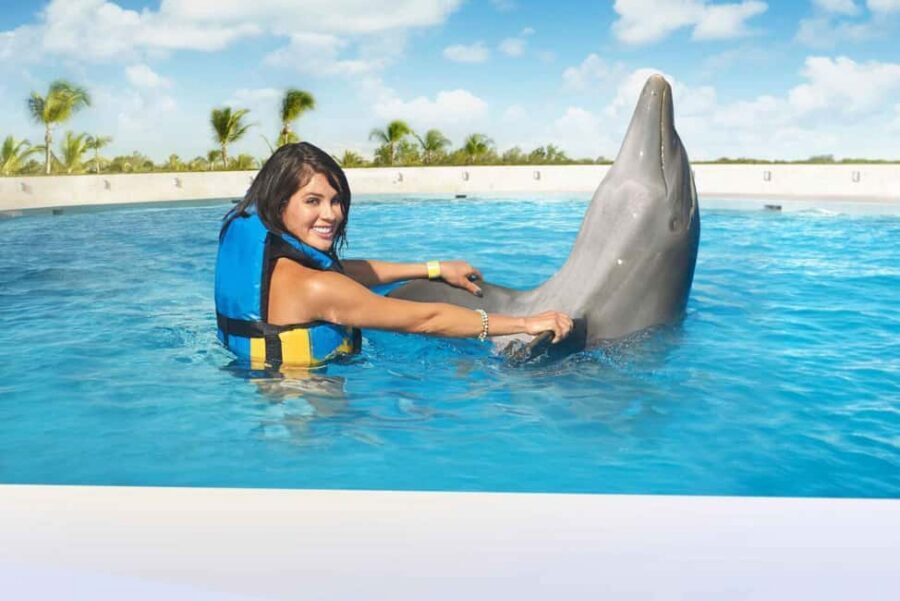
- Three dolphin program options so you can match your comfort level (including a platform approach)
- Marine mammal specialists who explain dolphin anatomy while you’re in the experience
- Ray and shark tank visit for a quick wildlife moment beyond the dolphins
- Mandatory life jackets for all aquatic programs, which helps the experience feel structured
- Photo restrictions in the water—you’ll want to budget for official souvenirs if you care about images
From Punta Cana Hotel Pickup to Dolphin Park Arrival
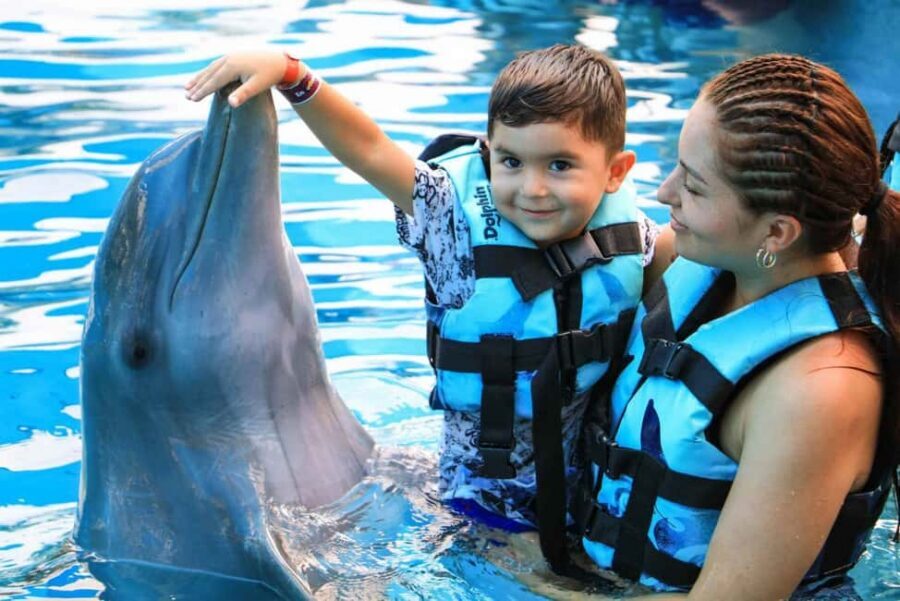
This is a 4-hour outing with hotel pickup and drop-off in La Altagracia, so you’re not piecing together transport or hunting for the right entrance. In practice, that matters in Punta Cana, where distances and traffic can quietly eat half a day if you do things on your own.
Once you’re picked up, you head to the dolphin park area for your program. You’ll be guided by a specialized staff member who keeps things moving and explains what to expect before you enter the water. The tour is designed for all ages, but with a few clear limits that you should read carefully—more on that later.
I like that the timing is tight enough to feel efficient, but not so rushed that you’re constantly waiting with nothing to do. You also get a built-in wildlife add-on (ray and shark tank), which makes the afternoon feel fuller than a straight dolphin-only swim.
You can also read our reviews of more dolphin watching tours in Punta Cana

Choosing Your Program: Platform Encounters, Kisses, and Royal Swims
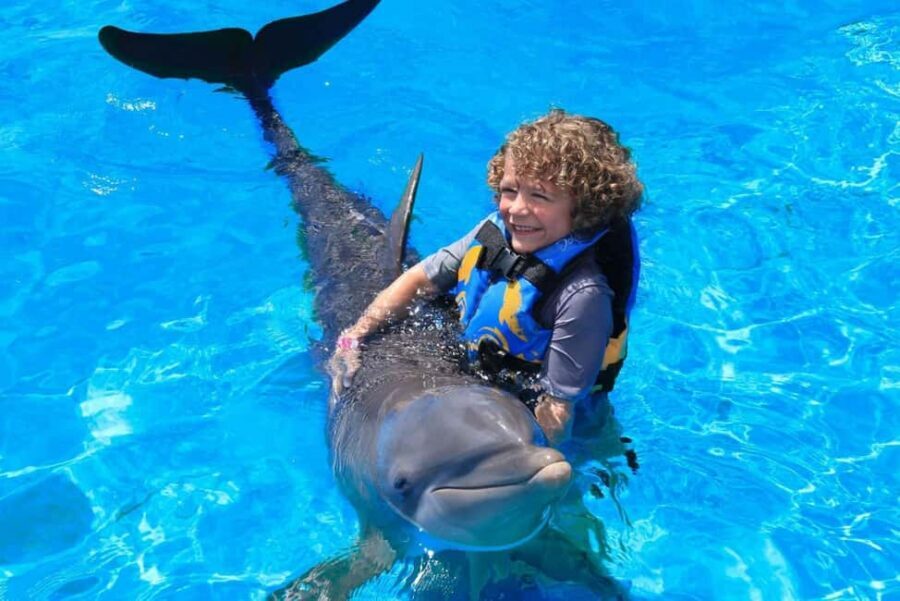
Your main decision is the dolphin interaction program. You can choose from three different programs, and the best one is the one that fits what you actually want to do in the water—because confidence level matters more here than bravado.
1) Platform-style interaction for non-swimmers
If swimming isn’t your thing, you’ll be grateful for the platform setup. The tour specifically notes that there’s a standing platform where dolphins approach you, letting you participate even if you’d rather not swim laps.
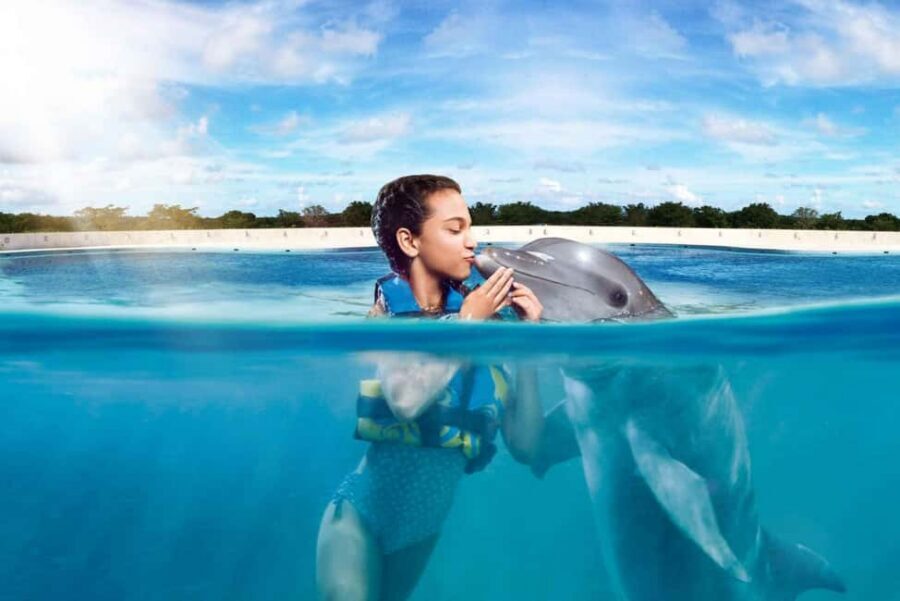
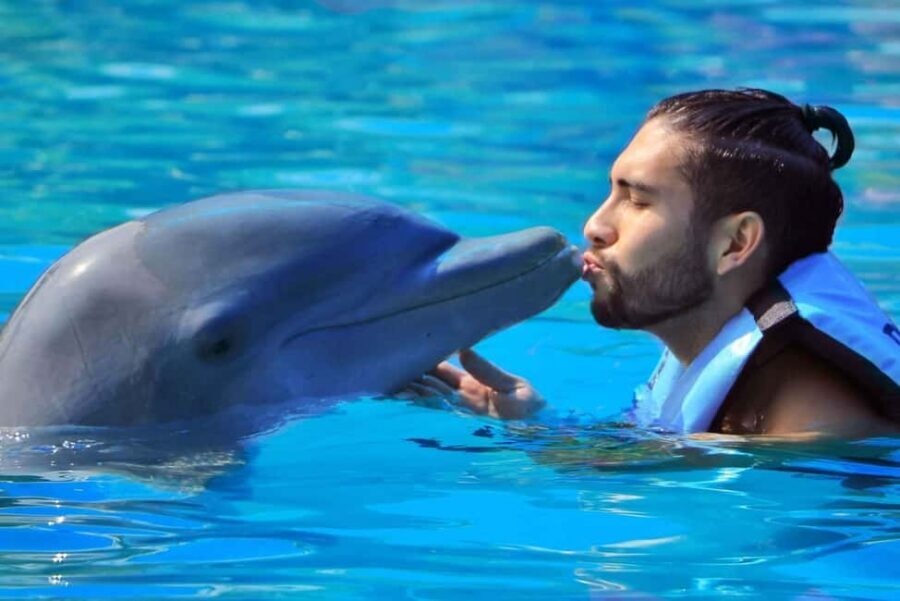
This matters for families and first-timers. You still get real contact-style moments—like handshakes, kisses, and hugs—without the stress of getting comfortable with buoyancy and moving water right away. If you’re traveling with mixed abilities, this option usually gives you a calmer, less chaotic experience.
2) The charming dolphin program with anatomy lessons
Another program focuses on a close, intimate interaction with a “charming dolphin,” including the “live the dream” moments like kissing and hugging. What makes this more than a photo op is the educational piece: marine mammal specialists teach dolphin anatomy during the experience.
That teaching component is a big reason the tour feels designed, not improvised. When you learn what you’re seeing—how dolphins use their bodies and what their features help them do—you tend to remember the experience longer, not just the moment itself.
3) Speed, agility, and a “royal swim” with two dolphins
The third option adds more movement and glide. You can expect two dolphins in the royal swim program, where you learn about their agility, intelligence, and strength. The description also mentions gliding through the water during a “foot push,” which signals that you’ll be moving with guidance rather than just standing still.
This is the program for you if you want motion and a stronger “swim-with-the-dolphins” feel. Just keep your expectations realistic: you’ll be part of a structured activity with lifeguard-style safety rules and specialist instruction.
Across all programs, there’s a theme of learning fun facts about the dolphin species and its ecosystem. Even if you’re not a marine-life superfan, it’s the sort of information that makes the encounter feel more meaningful.






The Ray and Shark Tank Stop: A Short Wildlife Bonus
About halfway through your time at the park, you’ll visit the ray and shark tank. It’s included in the price, so you’re not paying extra just to fill the day.
This is a nice balance when you’re traveling with kids or mixed-interest adults. Some people come only for dolphins; others want a broader “marine life” experience. The tank stop gives you that second category of excitement without adding a whole separate tour.
From a practical standpoint, it also gives your body a break from water activities. Even if your dolphin program is the highlight, having a land-based segment helps keep energy up for later interactions.
What You Learn From Marine Mammal Specialists in Real Time
The tour isn’t just “watch dolphins, then do dolphins.” A key selling point is that marine mammal specialists teach you along the way. You’ll hear about dolphin anatomy and how these animals move, using specifics about their bodies.
If you’re the type who likes to understand what you’re seeing, this part is valuable. Instead of feeling like you’re participating in a scripted routine, you start noticing details—how dolphins interact, how they use their body features during play, and what their movement means.
Even the “royal swim” description ties knowledge to motion, framing the encounter around intelligence and strength rather than only speed. That’s a better mental model for remembering the day: you’re not just swimming with an animal; you’re learning how that animal lives and communicates in its own way.
Rules That Matter: Cameras, Life Jackets, and Eligibility
This experience has clear boundaries, and they’re worth respecting because they affect what you can do and how the day feels.
Cameras aren’t allowed in the water
The activity states that cameras are not permitted during the aquatic parts, and the dolphin-side moments happen in the water. That leads to a very real consequence: you’ll likely rely on official photo/video packages for your dolphin contact memories.
This is where costs can surprise people. In the supplied experience feedback, one buyer highlighted that personal photography restrictions mean you may end up purchasing staff photos afterward, with examples like around $39 per person for a dolphin photo and much higher bundles for video and combined sets. Another comment called out the overall photo/video pricing as expensive. The key takeaway for your planning: if souvenirs matter to you, budget for them now, not after you’re already in the moment.
Life jackets are mandatory
The use of life jackets is mandatory in all aquatic programs. That’s not optional, and it’s a positive safety structure. It also means the tour is designed for predictable support, which helps first-timers relax.
Pregnancy restrictions
Pregnant women from 5 months and older are not accepted. If this affects your group, it’s important to check before booking so you don’t end up with a last-minute disappointment.
Non-swimmers and who should consider this
The tour is not suitable for non-swimmers. That sounds like a contradiction at first because there’s a platform option, but the key is that the activity’s overall suitability rules are strict. If you’re not a swimmer, confirm whether the platform option is acceptable for your specific case under the operator’s rules.
Also note the requirement: one adult per child participating in the activity. That’s the kind of detail that can derail families if you assume adults can “share a child” for the day.
Duration and Group Feel: What 4 Hours Really Means
Four hours sounds short, and in Punta Cana that’s a good thing. You get a complete wildlife outing without spending an entire day commuting plus waiting.
What you might notice, depending on the group schedule, is that some time can be spent organizing people and watching others. One piece of feedback mentioned that in a group of about 10 people, there was a lot of waiting and observing before their own dolphin turn. That doesn’t mean your day will be slow, but it’s a good reminder to mentally pack for moments of downtime.
Bring a positive mindset: the real action happens in the water, and the waiting portion is usually about safety briefing, life jacket checks, and rotating participants through each part of the program.
Price and Value: Is $140 Per Person Worth It?
At $140 per person for about 4 hours with hotel transfers, guide support, and a dolphin program plus ray/shark tank, the value depends on two things: how much you want contact time and how you feel about paid photos.
Here’s how I’d break it down:
- Included perks: you’re getting hotel pickup/drop-off, a specialized guide, and the dolphin program itself, plus the ray and shark tank stop. That’s real convenience value.
- The big “extra” cost: photographs (and possibly video) are not included, and cameras in the water are not allowed. Based on the feedback you provided, staff photo packages can be a significant add-on.
- Who gets the best value: families and first-timers who want a guided, safe environment. The educational component (anatomy lessons) also helps justify the cost because it adds meaning to the contact.
If you’re the type who views souvenir photos as optional, you may feel like the day is fairly priced. If you know you’ll want a dolphin keepsake for every family member, the total budget should include official photos right from the start. One feedback comment basically said the experience is fantastic but photo pricing is expensive—so even people who loved it flagged the cost of memories.
Who This Dolphin Experience Suits Best
This tour is a strong fit if you want a structured dolphin encounter with staff guidance and a learning component.
It’s especially good for:
- Families who want a memorable activity that still comes with safety rules and instruction
- First-time dolphin visitors who want the “safe and fun” feel without figuring anything out on your own
- People who like wildlife education, not just entertainment
- Travelers who choose a program that matches comfort level—especially the platform-style option if swimming is stressful
It may be a poor fit if:
- You don’t want to budget for official photos
- You need a camera for your own documentation during the aquatic interaction
- Your group includes anyone affected by the pregnancy rule or the non-swimmer suitability requirement
- You need a more flexible “watch and wait as long as you like” style, because your schedule is organized around rotating participants through the program
Should You Book Punta Cana Dolphins and Hotel Transfers?
I’d book this if you’re looking for an organized, guided dolphin encounter in Punta Cana that feels designed for real participation—plus a small wildlife bonus with the ray and shark tank. The standout strength is the combination of close interaction and marine specialist education, which keeps the experience from feeling shallow.
I’d pause and plan carefully if you care deeply about free personal photos from the water. With camera restrictions and higher official photo pricing, the “real cost” of the day may be higher than the headline price once you factor in souvenirs.
If you do book, go in knowing what you want most: close platform contact, the kissing/hug-style program, or the more active royal swim. Picking the right program is the difference between a day you love and a day you simply endure.
FAQ
How long is the Punta Cana dolphin interaction experience?
It runs for about 4 hours, and you’ll want to check availability for the starting times.
Is hotel pickup and drop-off included?
Yes. The price includes hotel pickup and drop-off.
What’s included besides the dolphin program?
The package includes a visit to the ray and shark tank and a specialized guide, plus the selected dolphin program.
Are cameras allowed during the dolphin interaction?
No. Cameras are not permitted during the aquatic parts of the experience.
Do you need to swim?
The experience is listed as not suitable for non-swimmers. The description also notes there is a platform for those who prefer not to swim, but the operator’s suitability rules still apply.
Is a life jacket provided, and is it required?
Life jackets are mandatory in all aquatic programs.
Are there restrictions for pregnant travelers?
Yes. Pregnant women from 5 months and older are not accepted.
What should I bring with me?
Bring sunglasses, a sun hat, swimwear, a towel, biodegradable sunscreen, and cash.
Which languages are the instructors available in?
The instructor offers English, French, Italian, Portuguese, and Spanish.