REVIEW · PUNTA CANA
Kiteboarding Lessons in Punta Cana
Book on Viator →Operated by Kiteology DR · Bookable on Viator
Kiteboarding starts with wind, not courage. What makes this Punta Cana lesson series interesting is the step-by-step progression and the small-group feel, so you can get real corrections instead of guessing. I like that you can choose 1, 2, or 3 days and get a daily 3-hour class tailored to your level. I also like that Lesson 1 starts with wind theory and trainer-kite control, so you’re not thrown onto a full-sized kite on day one.
The main drawback to consider is that kiteboarding depends on real wind. The school runs in all weather in terms of preparation and dressing appropriately, but the activity still needs good conditions, and you may be offered a different date or a refund if weather shuts things down.
In This Review
- Key things I think you’ll care about most
- Punta Cana kiteboarding lessons: how this course feels from start to finish
- Price and value: what $215.39 gets you (and what to check)
- Your 3-day progression: from wind window to your first waterstart
- Lesson 1: Wind theory and trainer-kite control
- Lesson 2: Full-sized kite control in the water
- Lesson 3: Upwind recovery, riding both ways, and waterstarts
- What the beach lesson routine looks like in real life
- Wind, spots, and why Punta Cana makes sense
- Coaching style: patience, hands-on corrections, and communication
- Gear and safety: what’s included, what to prepare, and how to avoid common issues
- Logistics that affect your day: meeting point, mobile ticket, and timing
- Practical packing tips for kiteboarding in Punta Cana
- Who should book this (and who should consider a different option)
- Should you book Kiteology DR in Punta Cana?
- FAQ
- How long is the kiteboarding instruction each day?
- Do I need prior kiteboarding experience?
- What is included in the lesson package?
- Is hotel pickup and drop-off included?
- Where do I meet the instructor?
- What do you learn on the first day?
- What do you learn on day two?
- What do you learn on day three?
- What happens if the weather is bad?
- How big is the group?
Key things I think you’ll care about most
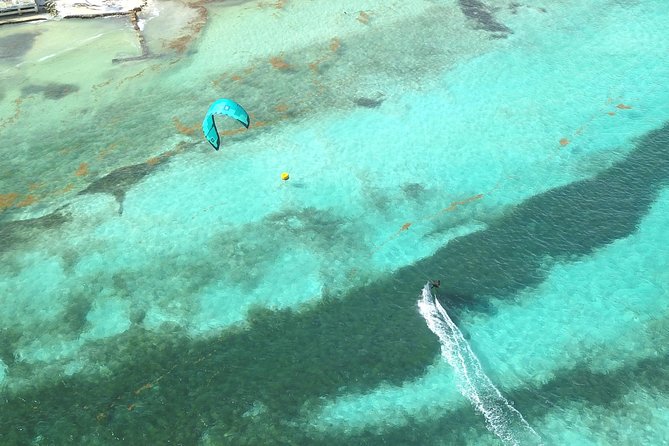
- Small group (max 4 people) means you get time with the instructor instead of waiting your turn.
- Wind theory first: you’ll learn the wind window and kite control basics before trying to ride.
- A clear 3-day progression that builds from trainer kites to water relaunches and finally waterstarts.
- 3 hours of instruction daily with plenty of practice time, not just a short demo.
- Helmets included, plus safety briefing and guidance during the session.
- Expert coaching style is praised for patience and clear, hands-on corrections (often with radio coaching).
Punta Cana kiteboarding lessons: how this course feels from start to finish
Kiteboarding in Punta Cana is a good match because the area is known for regular kite conditions. But the bigger reason this course stands out is the way it teaches the sport as a system: wind, equipment, control, then riding.
You meet your instructor at the Punta Cana Kitesurf Academy area (La Altagracia Province). After you get suited up and do a safety briefing, you head to the beach to start the lesson. From there, it’s a mix of teaching moments and hands-on repetition, which matters a lot in a technical sport like this.
You can also read our reviews of more tours and experiences in Punta Cana.


Price and value: what $215.39 gets you (and what to check)
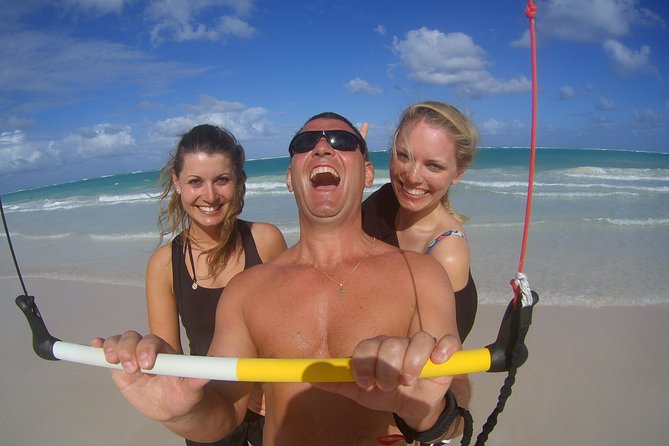
The listed price is $215.39 per person. Since the course can be booked for 1, 2, or 3 days, make sure you’re looking at the rate that matches the number of lesson days you want.
Here’s why the value can be strong: you’re paying for multiple hours of expert coaching plus time to practice. A small group capped at four people also helps; the instructor isn’t spreading attention across a big crowd.
What’s not included is also worth noting: food and drinks aren’t part of the package. Hotel pickup and drop-off may or may not be included depending on the option you select, so plan to get yourself to the academy meeting point unless you clearly choose a pickup-inclusive option.
Your 3-day progression: from wind window to your first waterstart
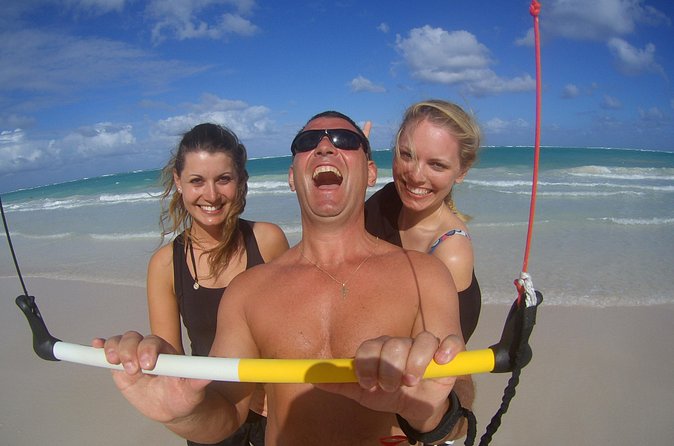
This course is built like a ladder. Each day adds a skill layer, so you’re not just learning tricks—you’re building the control you need to keep progressing.
Lesson 1: Wind theory and trainer-kite control
On day one, you start with the fundamentals: wind theory and the wind window (the area where the kite needs to fly for control). Then you move into hands-on equipment time.
You’ll learn how to use the gear and get your first go at piloting a trainer kite. The focus is steering and basic kite handling, including practicing steering with one hand. That early work helps you understand how the kite responds before you ever commit to riding with a full-sized setup.
Lesson 2: Full-sized kite control in the water
Day two steps up to a full-sized kite. This is where control becomes more physical and more technical because you’re dealing with the water and the board.
You practice water relaunch techniques and downwind body dragging. The goal is simple to say and hard to do: get the kite flying and get the board back under you so you can keep going instead of restarting every time.
This is also the day many beginners feel the thrill of catching the wind and moving across the water for the first time. That jump from land-based learning to powered movement is what makes kiteboarding addictive.


Lesson 3: Upwind recovery, riding both ways, and waterstarts
If you choose the full 3-day option, day three focuses on more complex maneuvers.
You work on an upwind bodydragging technique used to recover the board and positioning that helps you not lose momentum. You also practice riding the board in both directions, which is key if you want to build real skills instead of staying stuck in one stance.
Finally, you try your first waterstarts. That’s the moment where everything you learned earlier—kite control, body position, and timing—has to come together. Even if you don’t nail it perfectly, you leave with a clear path for what to practice next.
What the beach lesson routine looks like in real life
The day typically starts with you getting to the academy, meeting the instructor, and getting geared up. Then comes the safety briefing. In kiteboarding, safety isn’t a formality; it’s the difference between learning fast and getting bounced around by the kite.
After that, you head out to the beach. The training is structured around your level, which is important because beginners need different coaching than someone trying to refine technique.
You’ll spend time on the water practicing what you just learned, not just watching from the shore. With the small-group limit, you also get more chances for the instructor to correct how you’re holding the lines, how you’re positioning your body, and how you’re steering the kite.
Wind, spots, and why Punta Cana makes sense
Punta Cana is known for kiteboarding, and you’ll feel that right away in the way the team talks about conditions. The school aims to use the winds available, and that’s the real secret ingredient.
In the area, people often kite around the Bávaro and Pearl Beach Club vicinity, where you can find practice-friendly water like knee-deep sections. That type of shallow learning zone matters because it lets you practice control without instant panic.
Some sessions may also include riding at spots farther along the coast when the wind is better, such as Las Salinas and the Dunes de Bani area. If you want variety, ask when you arrive about the plan for the day based on wind.
Coaching style: patience, hands-on corrections, and communication
Kiteboarding lessons can be frustrating if the instruction is vague. The strongest praise for this school centers on how clearly the instructors teach and correct your technique.
You’ll likely hear guidance that connects what you feel to what the kite is doing. In several accounts, instructors like Humberto and the wider team (including people such as Marino, Felix, Nelson, Cuco, Seguín, and Moreno) are described as patient and focused on safety and control.
Another detail that can make a big difference: some coaching uses radio communication during sessions. That means you can get real-time corrections without the instructor needing to run back and forth on the beach. If you’re the kind of learner who needs feedback at the exact moment something goes wrong, that helps a lot.
Gear and safety: what’s included, what to prepare, and how to avoid common issues
The package includes use of a helmet. Beyond that, you’ll use the kites and training equipment as part of the lessons. Day one uses a trainer kite, and later days move to full-sized kites, plus practice skills in the water like relaunches and body dragging.
The safety briefing is part of the routine, and since the course is offered to complete beginners, it should be methodical. Still, your comfort is part of success, so show up willing to get wet, willing to repeat basics, and ready to follow instructions even when you think you have a shortcut.
For moderate fitness needs: kiteboarding works your legs and core, and water time can be tiring. If you’re recovering from an injury or dealing with mobility limits, it’s smart to take it slow on day one and tell the instructor what you can handle.
Logistics that affect your day: meeting point, mobile ticket, and timing
This experience starts at La Altagracia Province. You’ll make your own way to the academy and meet your instructor there.
It also uses a mobile ticket, which is helpful because you’re not chasing printed paperwork. Just make sure your phone battery is charged and you can access the ticket quickly.
On average, people book about a week in advance. That’s a good sign this is popular, especially for visitors who plan their activities around wind and schedules. If you’re traveling with tight timing, consider booking soon so you can fit the course into the best-wind window.
Practical packing tips for kiteboarding in Punta Cana
This is a beach activity, so pack for getting wet and staying comfortable between practice rounds.
Dress appropriately for changing conditions, since the operation runs in all weather in terms of preparation. Even if it looks sunny, kiteboarding often involves wind chill, so don’t rely on a single light layer.
Bring what you need for sun protection and quick dry time. Also plan time for hydration, because kiting plus heat can sneak up on you even when you’re not exerting constantly.
If you have your own swim gear that you love for long water sessions, bring it. If not, you might find a basic setup is enough as long as it stays secure and doesn’t annoy you during line handling.
Who should book this (and who should consider a different option)
This is a strong fit if you:
- Want to learn from scratch without feeling thrown in.
- Prefer small-group attention.
- Like a clear progression from theory to control to riding.
It’s also a good choice if you already tried kiteboarding before and want a structured skill rebuild. The three-day path can help you tighten fundamentals like wind understanding and upwind recovery.
You might rethink your choice if:
- You can’t travel to the academy meeting point on your own and need pickup included. Pickup can be an option, but it depends on what you select.
- You’re looking for a purely casual beach day. This is an instruction-heavy course with active practice.
Should you book Kiteology DR in Punta Cana?
Yes—if you want a real skill path instead of a one-off demo. The combination of beginner-friendly teaching, a small group capped at four, and a day-by-day progression from wind theory to waterstarts makes this a practical way to learn kiteboarding.
Book it if you’re serious about learning how the kite works and you’re okay with the wind deciding the schedule. If you’re flexible and you show up ready to practice, you’ll get a lot more out of those 3-hour sessions than you would from a rushed try-it class.
If you want to make the decision confidently, check one thing first: confirm which day option your $215.39 rate covers, and whether your choice includes hotel pickup or just self-arrival to the academy.
FAQ
How long is the kiteboarding instruction each day?
The course includes a daily 3-hour class. You can choose a 1-, 2-, or 3-day experience depending on what level and time you want.
Do I need prior kiteboarding experience?
No experience is necessary. The lessons are available for complete beginners and also for people who want to improve their skills.
What is included in the lesson package?
You get a professional guide and use of a helmet. Instruction covers using the kite equipment as part of the skill progression.
Is hotel pickup and drop-off included?
Hotel pickup and drop-off is not included unless you select an option that includes it. Otherwise, you make your own way to the academy to meet your instructor.
Where do I meet the instructor?
The start location is in La Altagracia Province, Dominican Republic, at the Punta Cana Kitesurf Academy meeting area.
What do you learn on the first day?
Day one focuses on wind theory and the wind window, plus learning the equipment. You use a trainer kite for your first piloting practice and steering with one hand.
What do you learn on day two?
Day two moves to a full-sized kite and focuses on controlling it in the water. You practice skills like a water relaunch and downwind body dragging.
What do you learn on day three?
Day three covers more complex maneuvers like an upwind bodydragging technique and riding the board in both directions. You also try your first waterstarts.
What happens if the weather is bad?
The activity requires good weather. If it’s canceled due to poor weather, you’ll be offered a different date or a full refund.
How big is the group?
The experience has a maximum of 4 travelers, which keeps the instruction more personal.